Kansas Governor's Water Conference
Kansas Water Office
The 2025 Governor's Conference on the Future of Water in Kansas will take place on November 12 & 13 at the Hilton Garden Inn in Manhattan.
More info: https://www.kwo.ks.gov/news-events/governor-s-water-conference
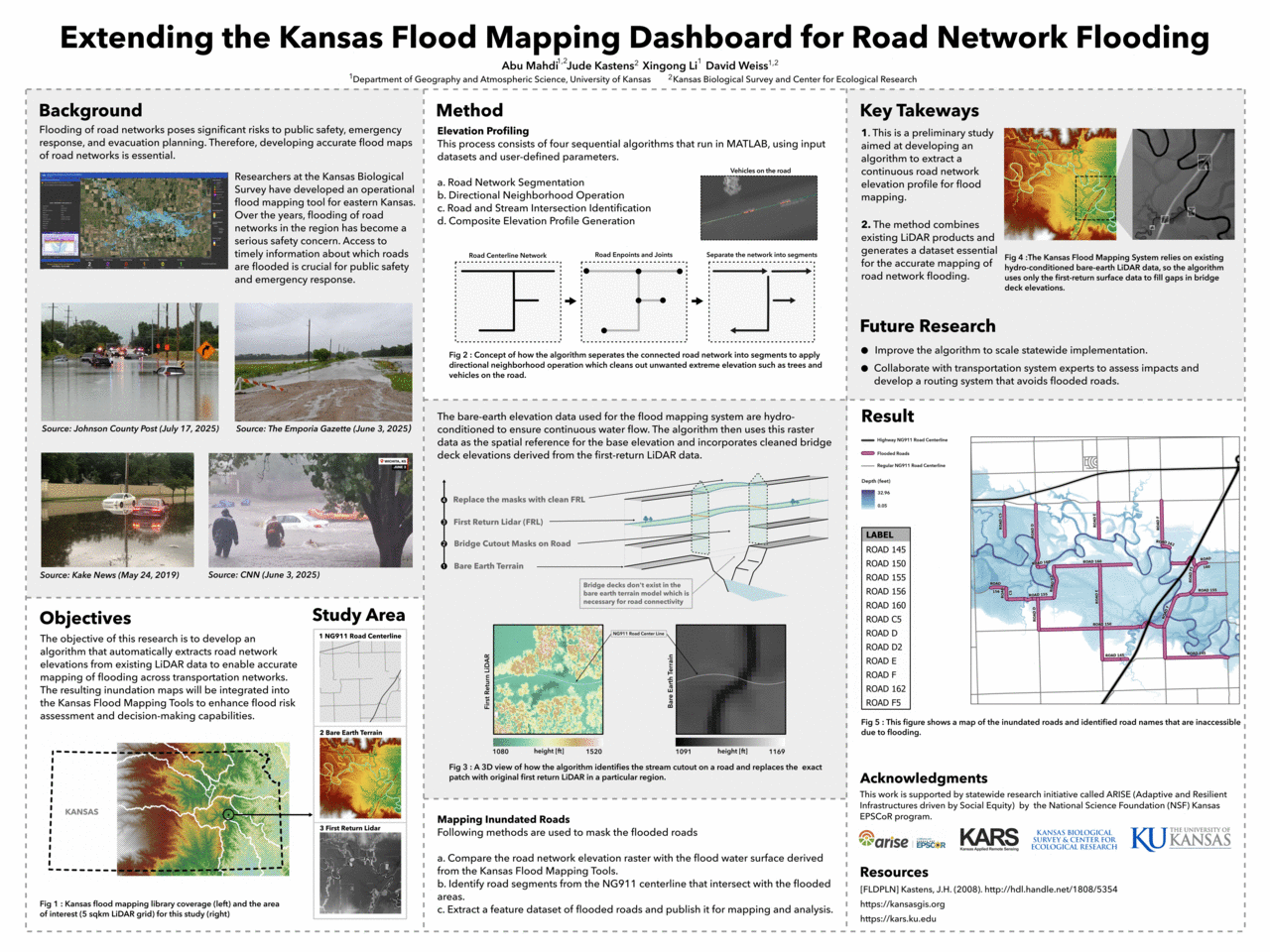
Extending the Kansas Flood Mapping Dashboard for Road Network Flooding
Abu Mahdi, Jude Kastens, Xingong Li, David Weiss

Water Quality Assessment of Big Creek Reach in Ellis County, KS
Nathaniel Tabor, Olivia Reed, Fama Dia
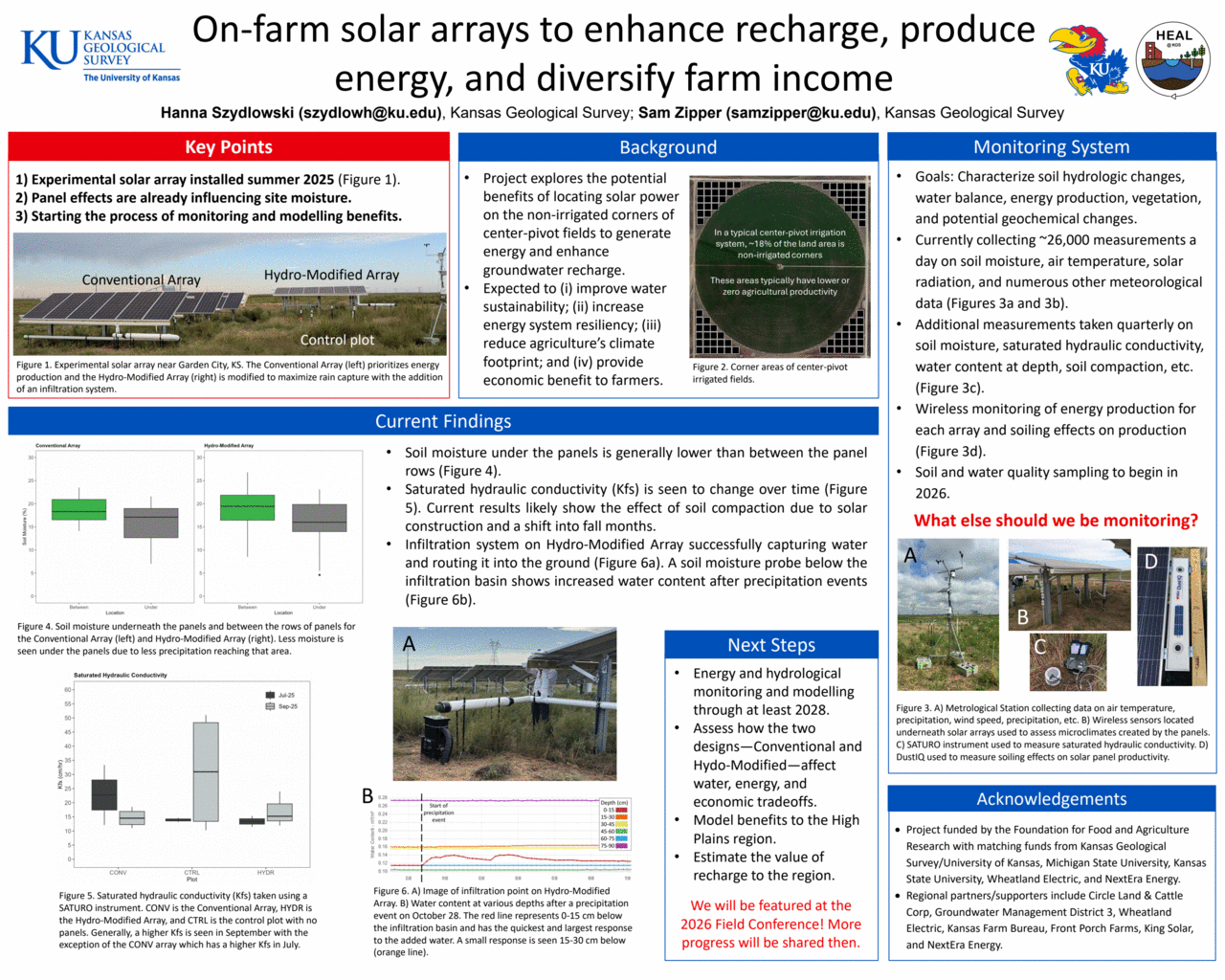
On-farm solar arrays to enhance recharge, produce energy, and diversify farm income
Hanna Szydlowski, Sam Zipper
Our pilot-scale pivot-corner solar recharge system became operational in late summer 2025. Following its deployment, we will conduct detailed hydrological and energy monitoring to evaluate the system’s performance against conventional solar designs and assess benefits in the hydrologic, climate, energy, and economic sectors. This poster highlights the current status of the project, next steps, and offers preliminary results on site soil hydrologic changes.
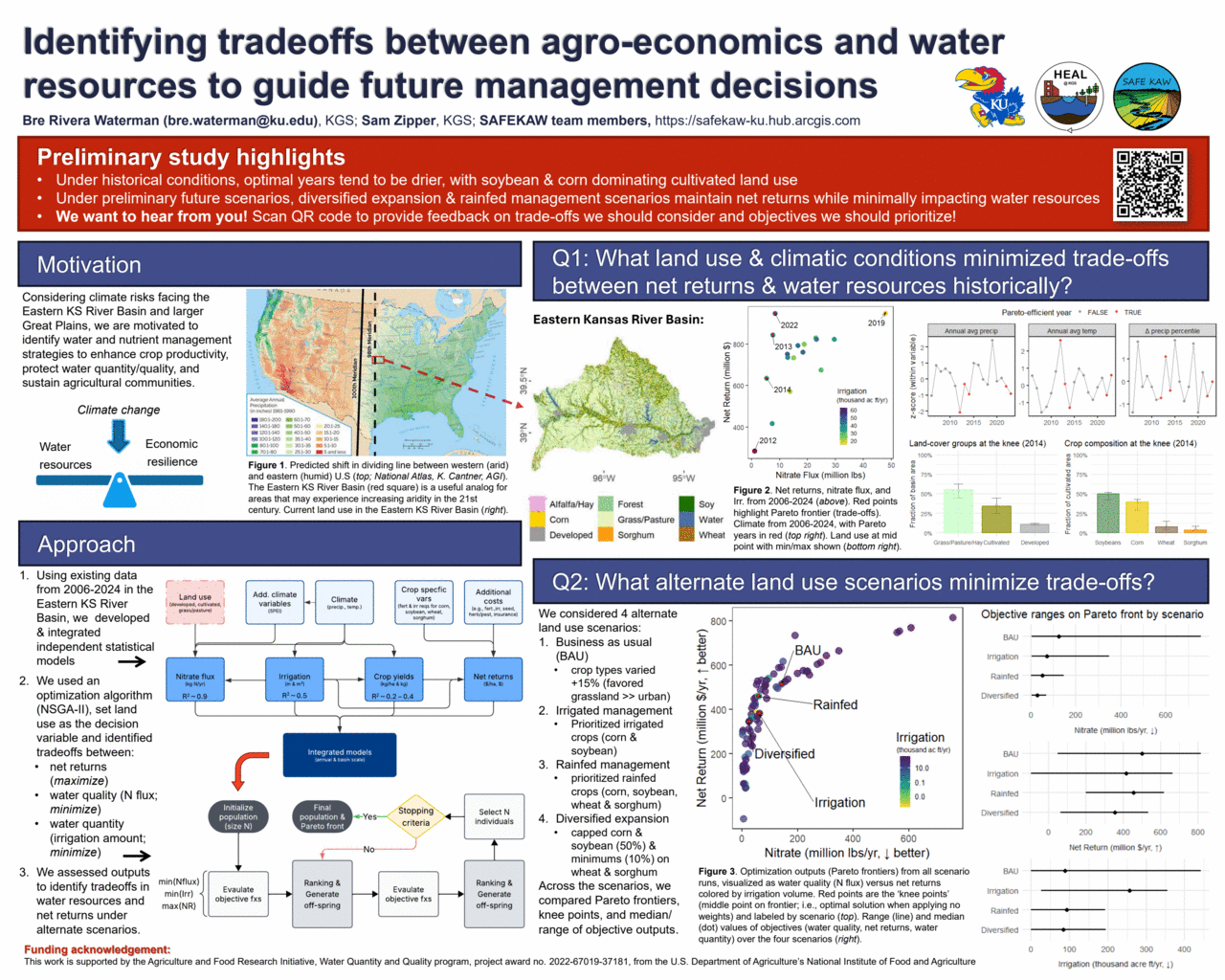
Identifying tradeoffs between agro-economics and water resources to guide future management decisions
Bre Rivera Waterman, Sam Zipper
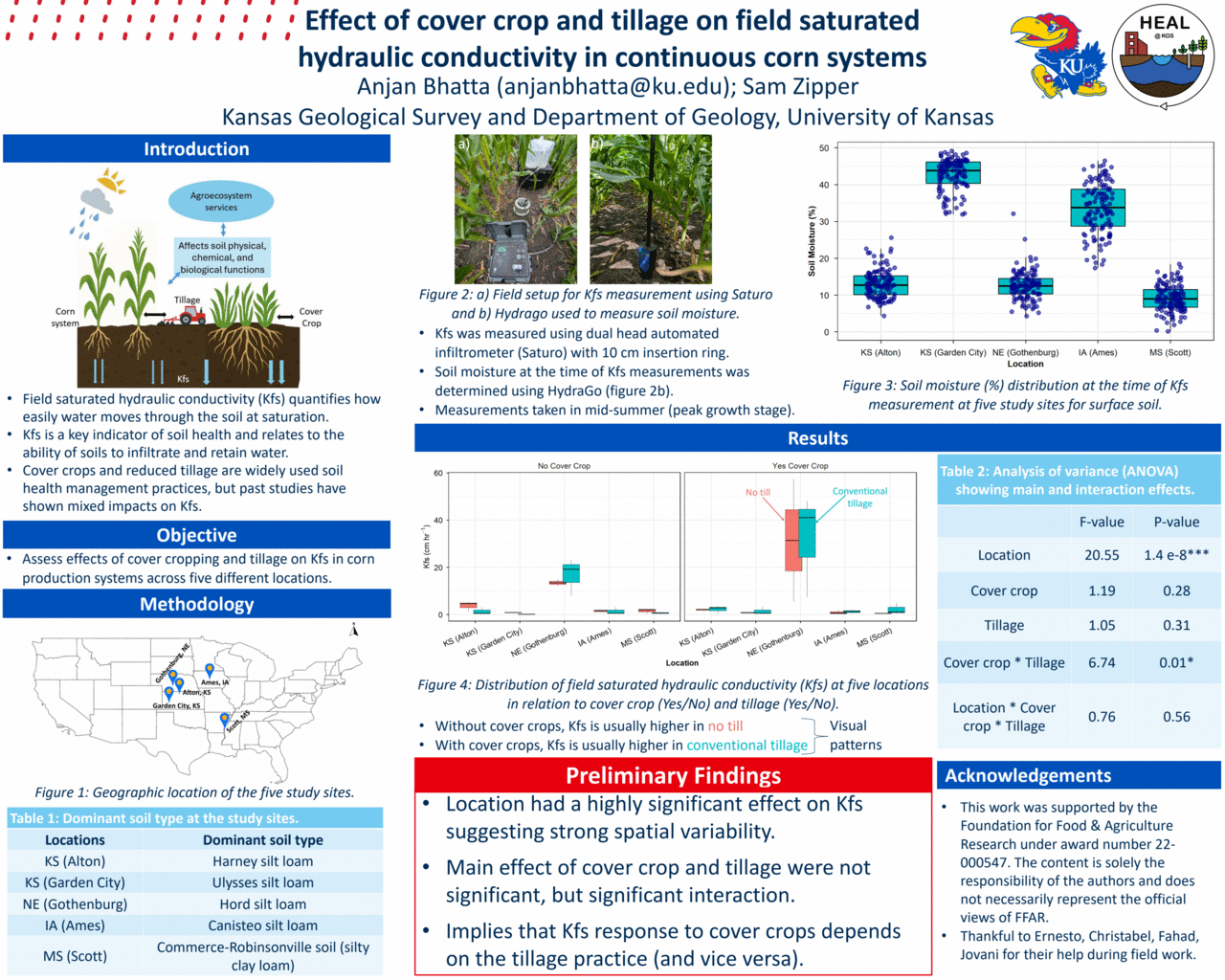
Effect of cover crop and tillage on field saturated hydraulic conductivity in continuous corn systems
Anjan Bhatta, Sam Zipper
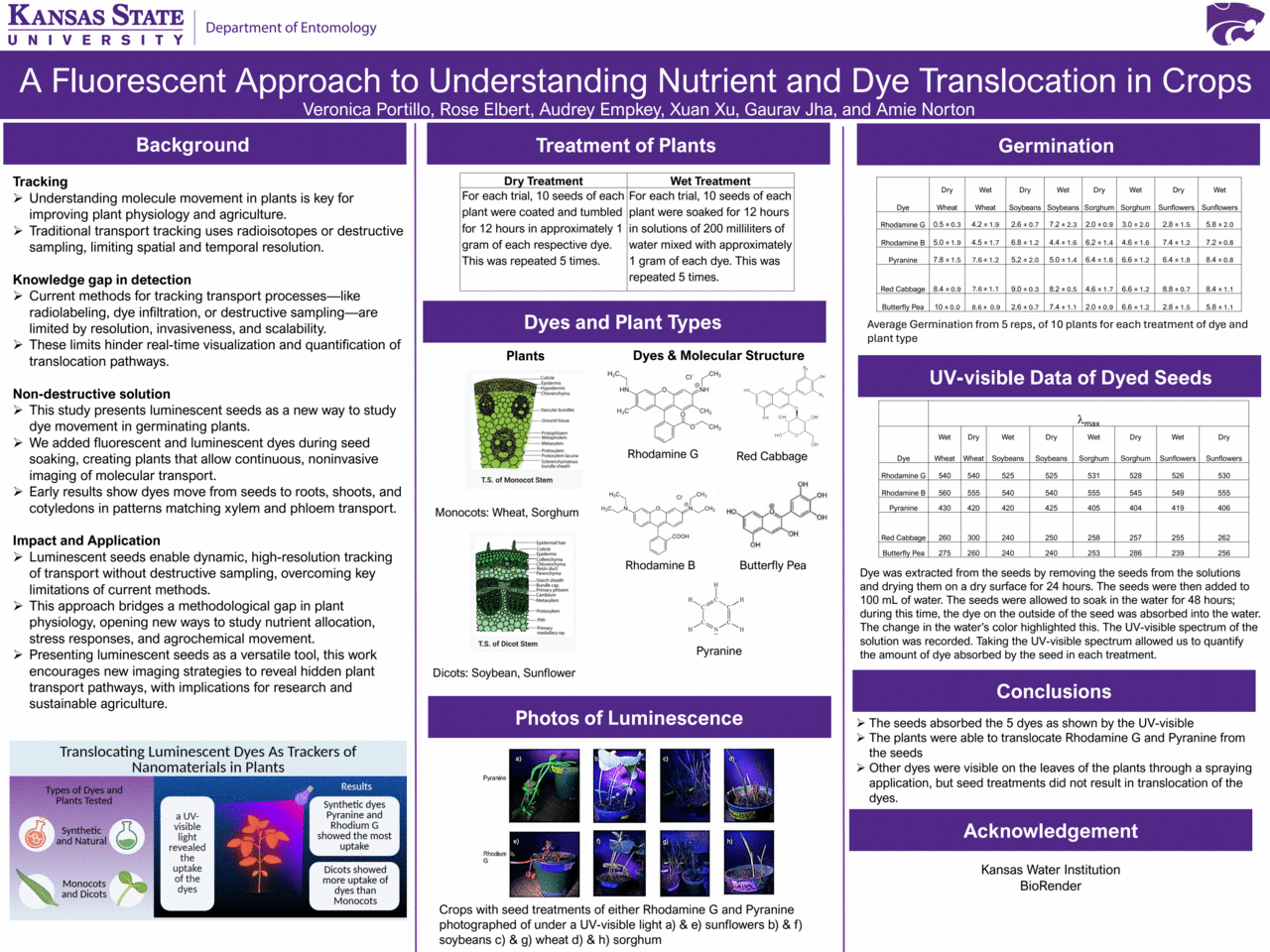
A Fluorescent Approach to Understanding Nutrient and Dye Translocation in Crops
Veronica Portillo, Rose Elbert, Audrey Empkey, Xuan Xu, Gaurav Jha, Amie Norton

Delineation of Arctic Valleys in Fennoscandia
Tyler Smith, Aleksey Sheshukov
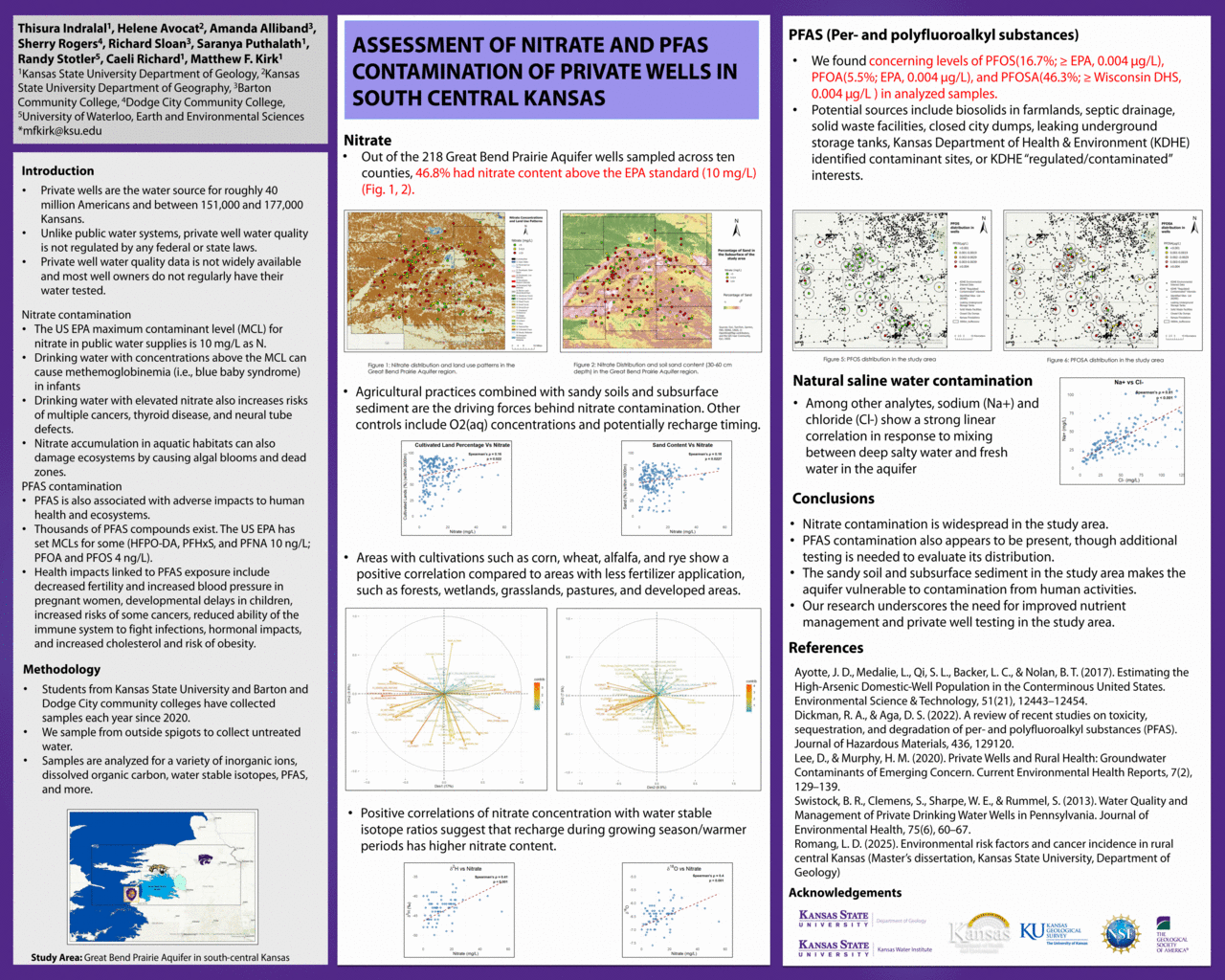
Assessment of Nitrate and PFAS Contamination of Private Wells in South Central Kansas
Thisura Ilukgoda Gedara, Helene Avocat, Amanda Alliband, Sherry Rogers, Richard Sloan, Saranya Puthalath, Randy Stotler, Caeli Richard, Matthew F. Kirk
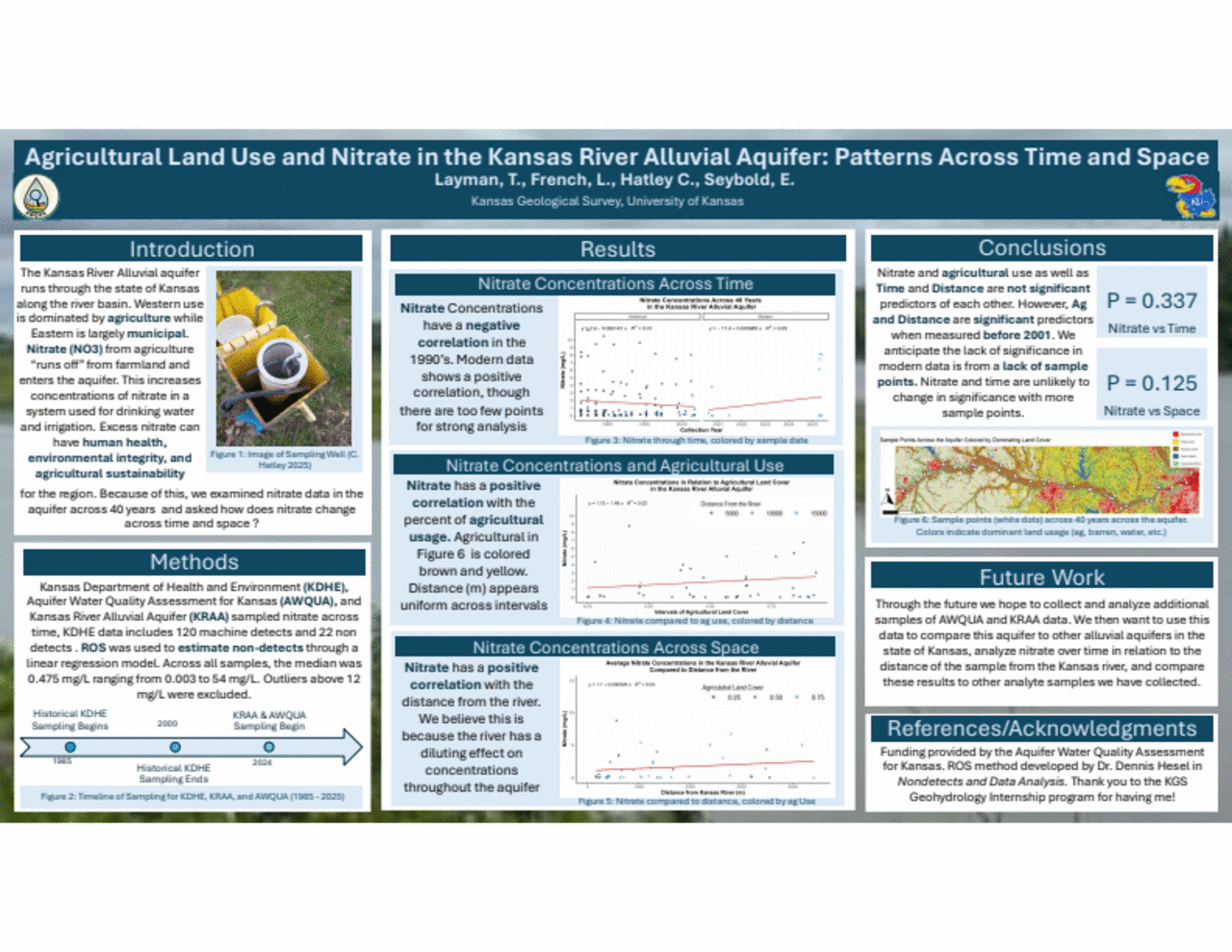
Agricultural Land Use and Nitrate in the Kansas River Alluvial Aquifer: Patterns Across Time and Space
Taylor Layman, L. French, C. Hatley, E. Seybold
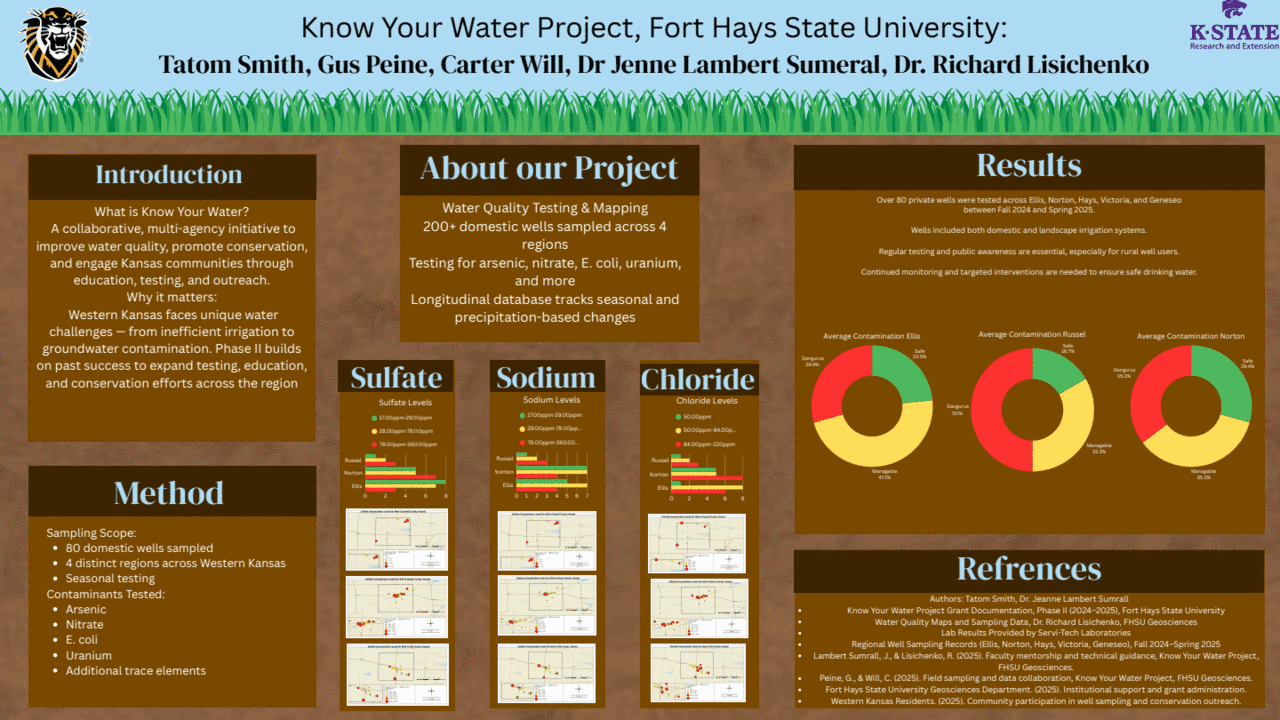
Know your water II
Tatom Smith, Gus Peine, Carter Will, Dr. Jenne Lambert Sumeral, Dr. Richard Lisichenko
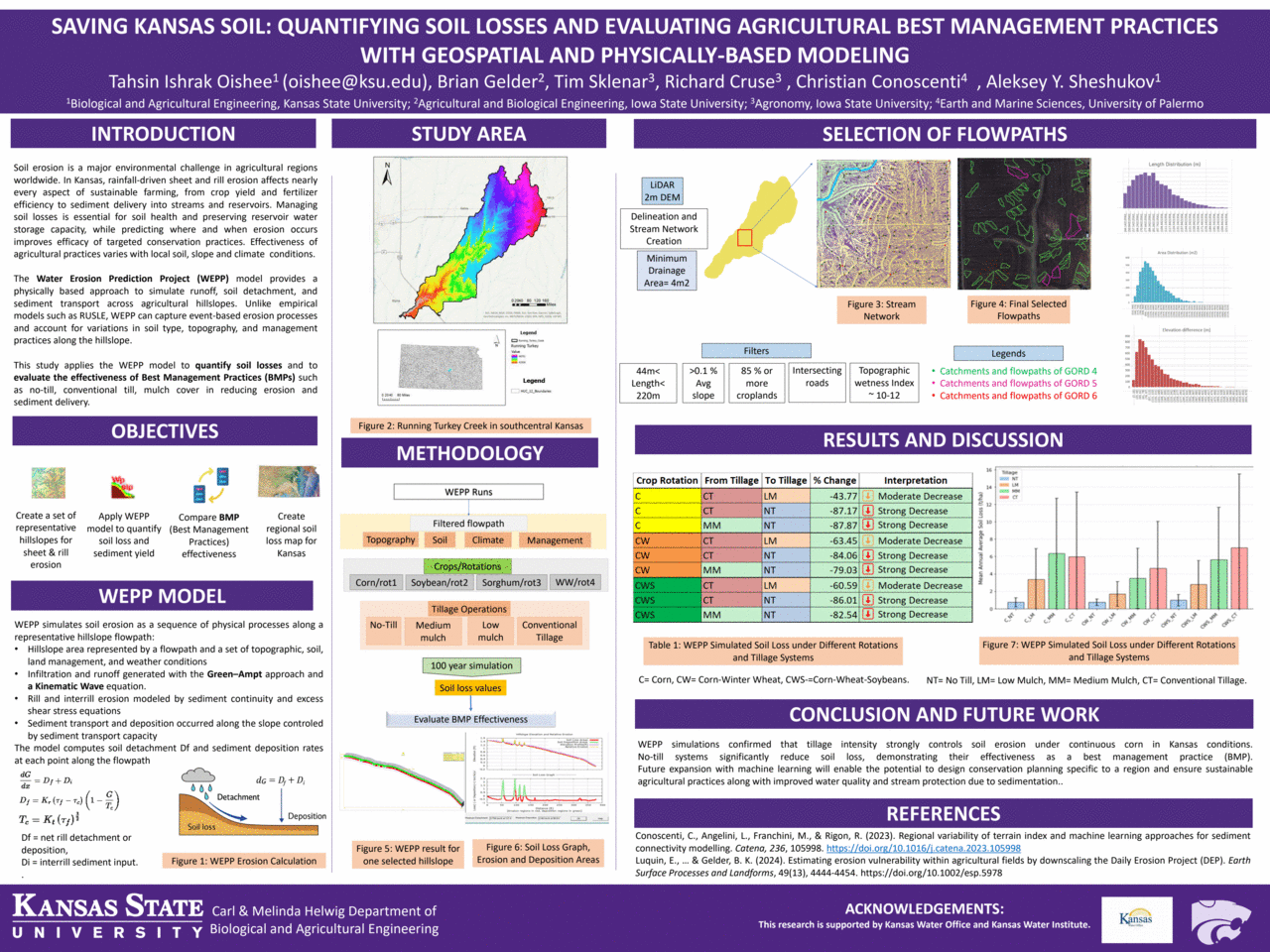
SAVING KANSAS SOIL: QUANTIFYING SOIL LOSSES AND EVALUATING AGRICULTURAL BEST MANAGEMENT PRACTICES WITH GEOSPATIAL AND PHYSICALLY-BASED MODELING
Tahsin Ishrak Oishee, Brian Gelder, Tim Sklenar, Richard Cruse , Christian Conoscenti, Aleksey Sheshukov
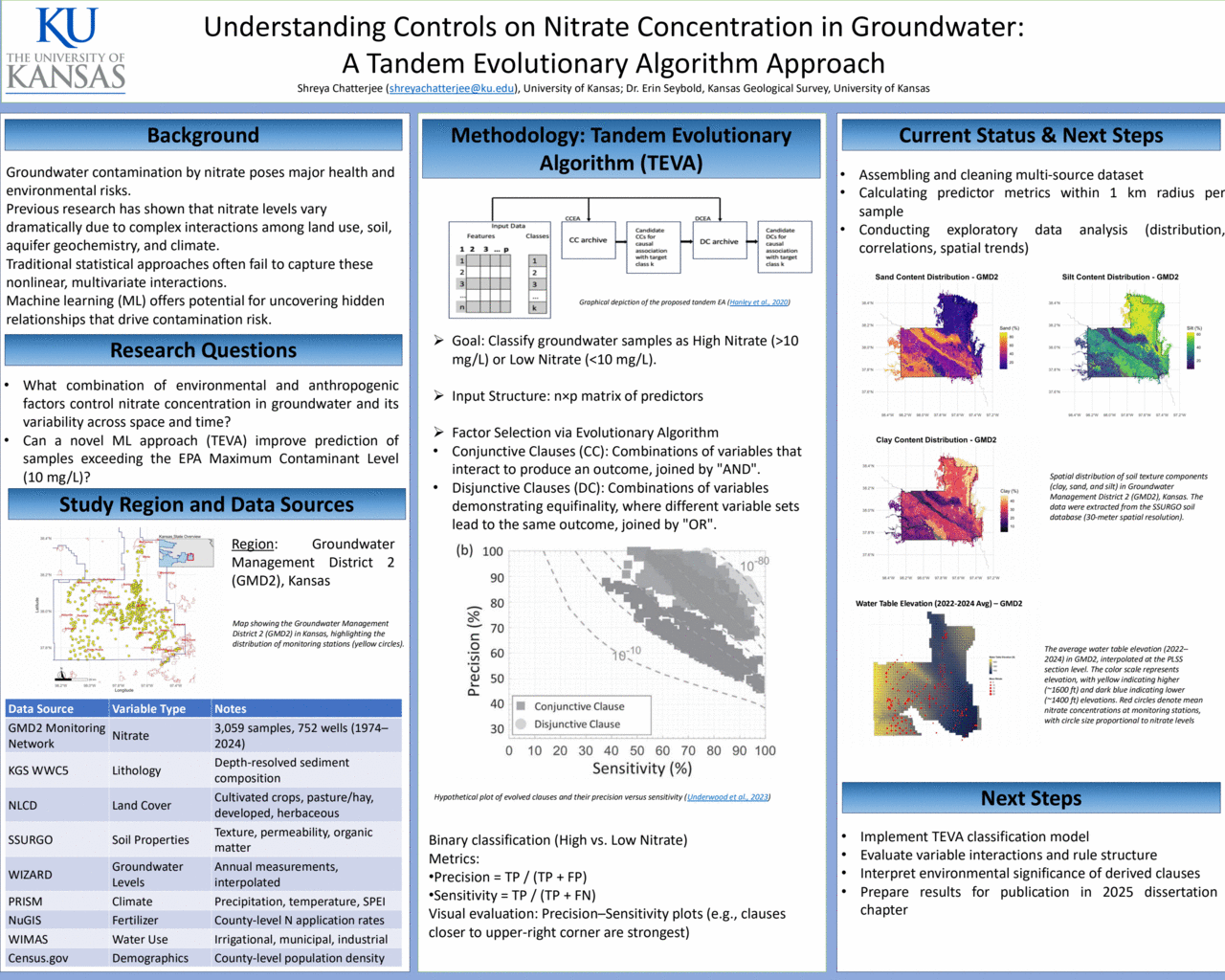
Understanding Controls on Nitrate Concentration in Groundwater: A Tandem Evolutionary Algorithm Approach
Shreya Chatterjee, Erin Seybold
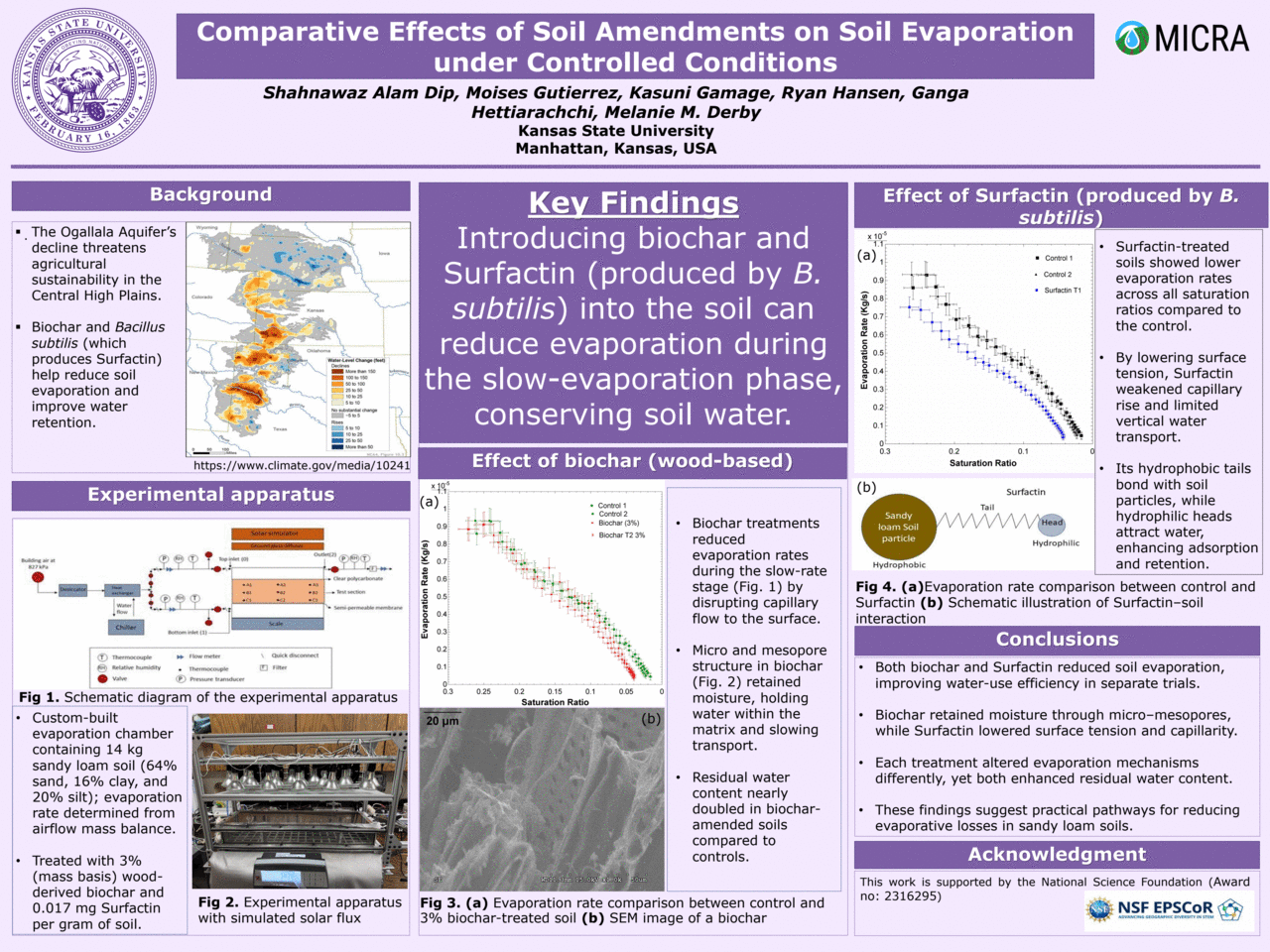
Comparative Effects of Soil Amendments on Soil Evaporation under Controlled Condition
Shahnawaz Alam Dip, Moises Gutierrez, Kasuni Gamage, Ryan Hansen, Ganga Hettiarachchi, Melanie Derby
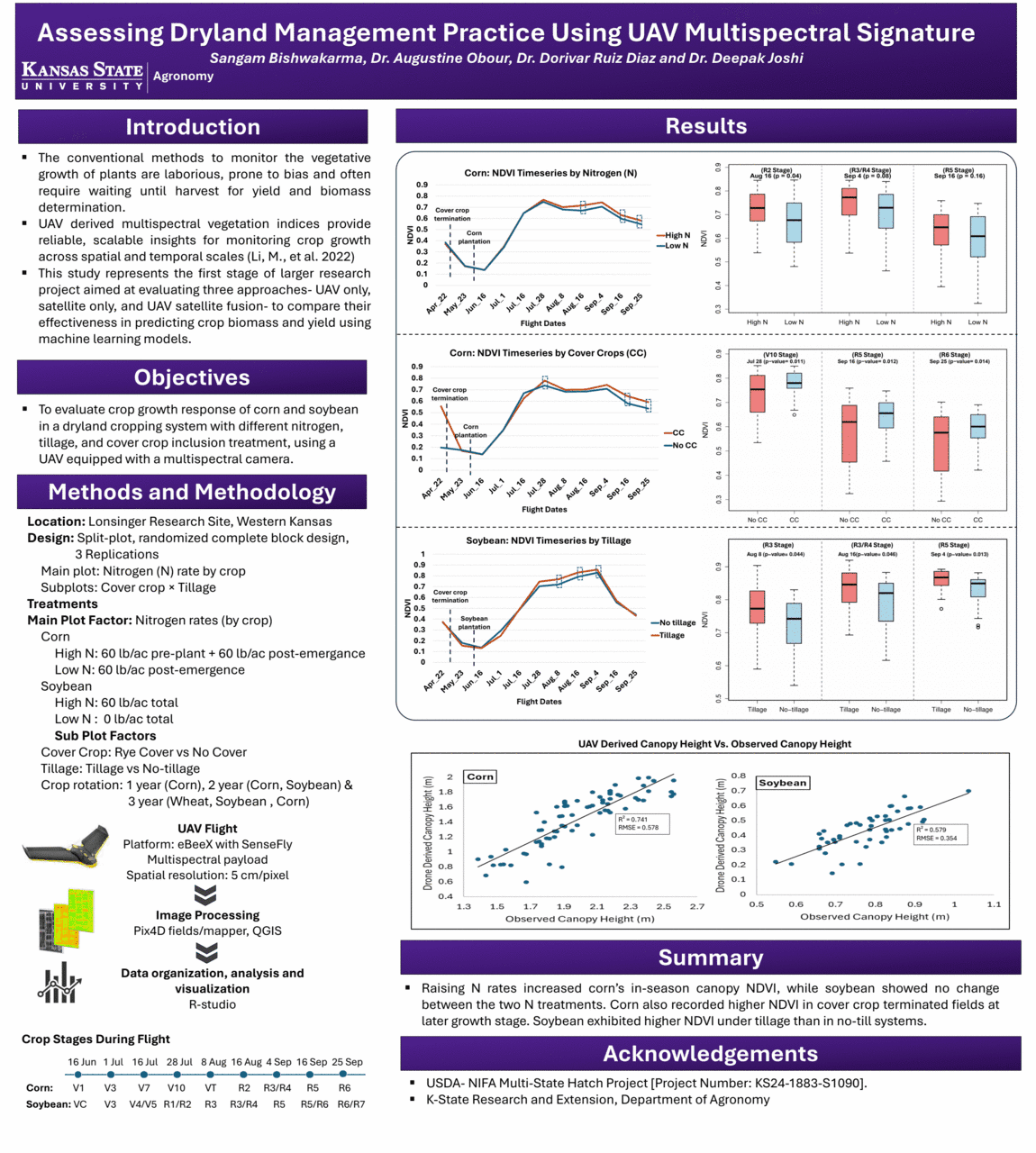
Assessing Dryland Agriculture Management Practices Using UAV Multispectral Signatures
Sangam Bishwakarma, Dr. Augustine Obour, Dr. Dorivar Ruiz Diaz, and Dr. Deepak Joshi
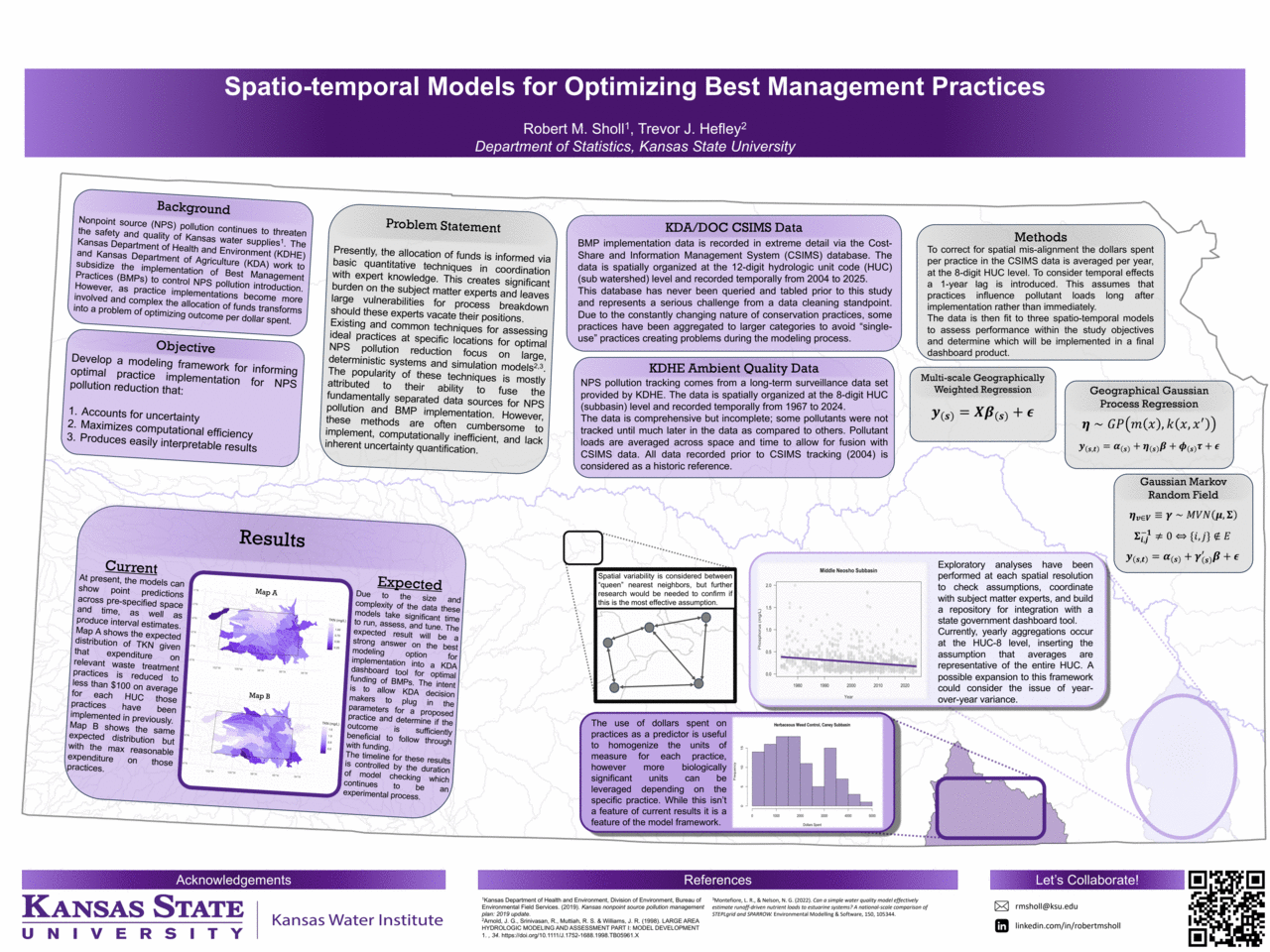
Spatio-temporal Models for Optimizing Best Management Practices
Robert Sholl, Trevor Hefley
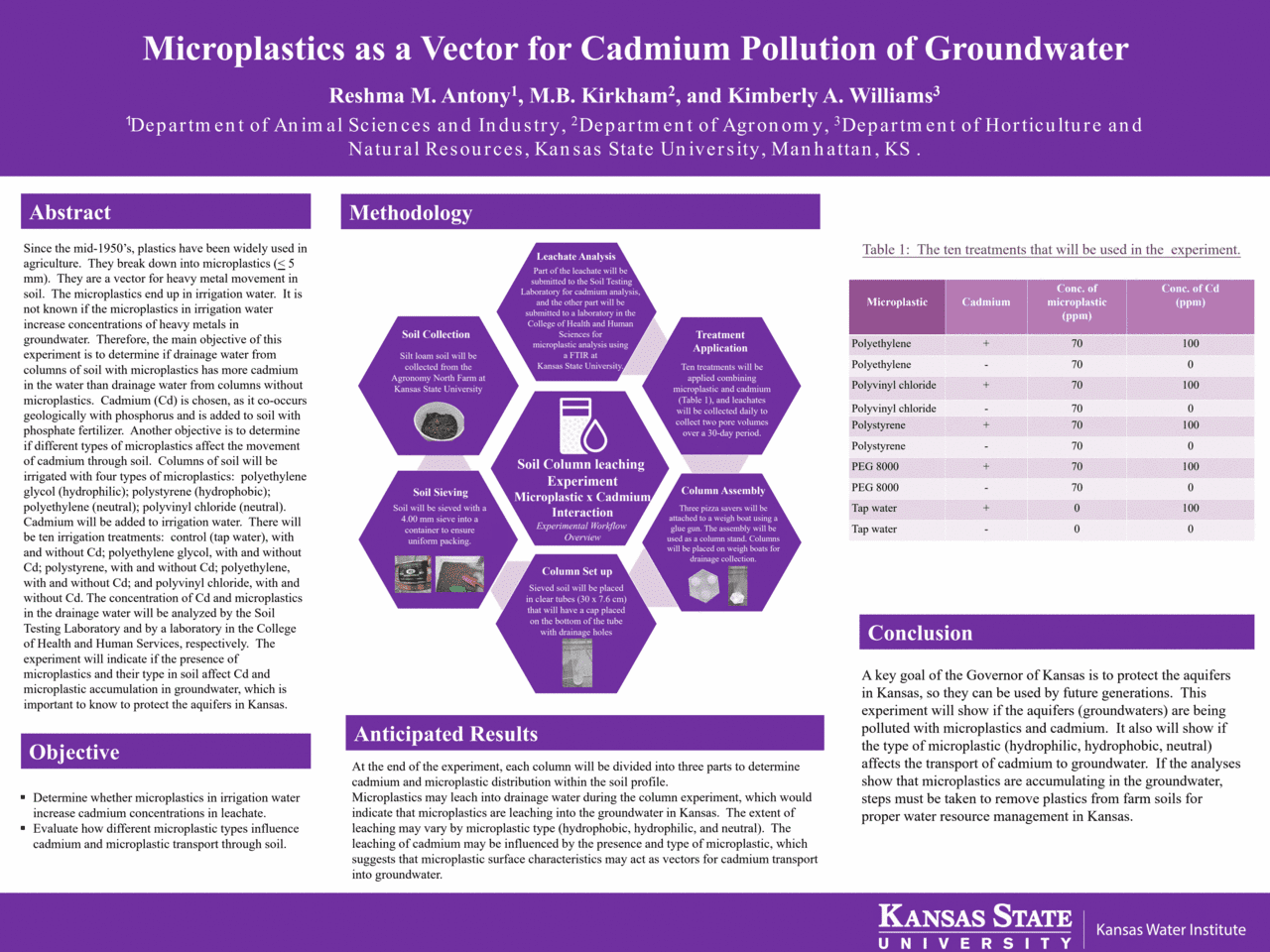
Microplastics as a Vector for Cadmium Pollution of Groundwater
Reshma M Antony, M.B. Kirkham, and Kimberly A. Williams
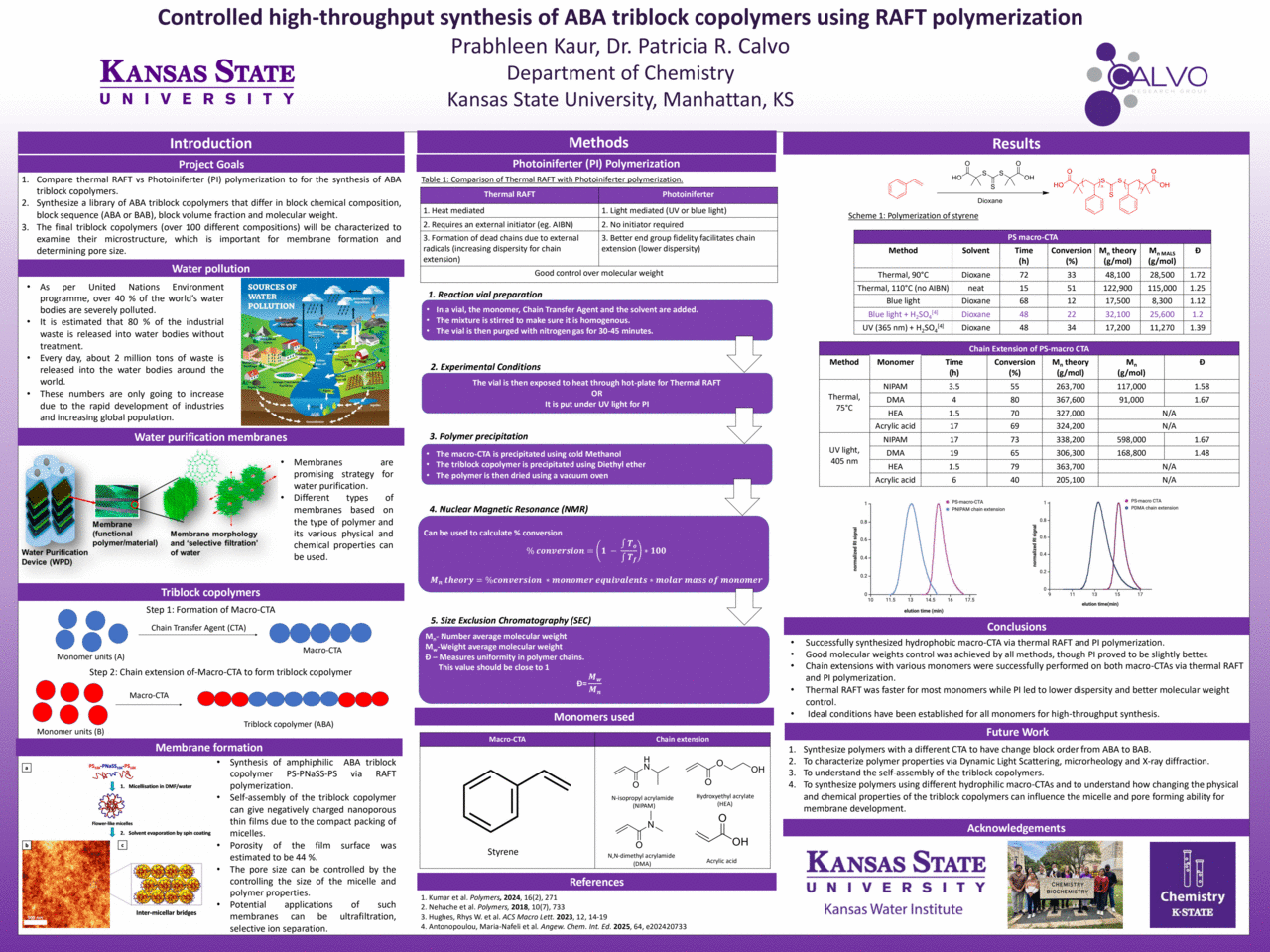
Synthesis of ABA triblock copolymers via RAFT polymerization for water purification membranes
Prabhleen Kaur, Dr. Patricia R. Calvo
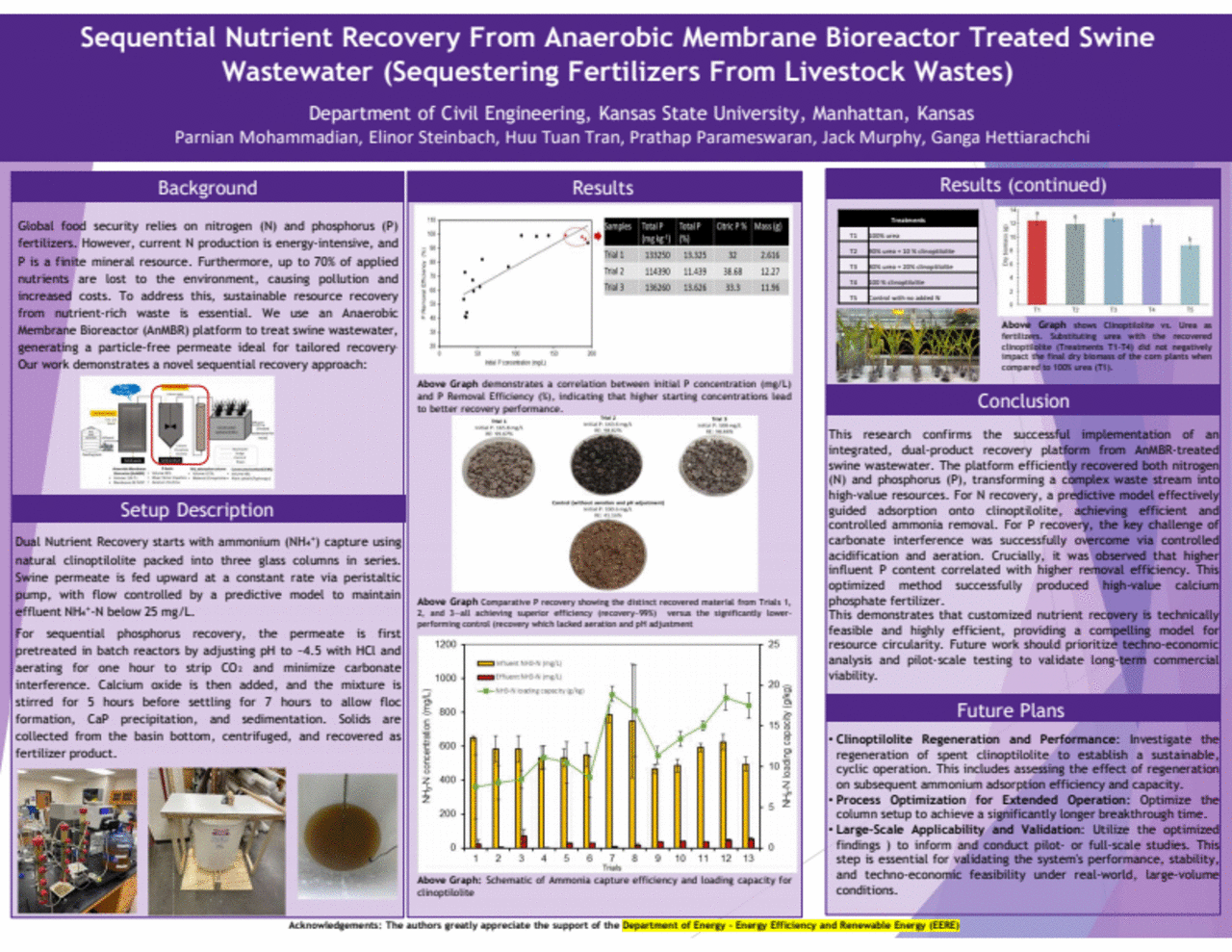
Sequestering fertilizers from livestock wastes
Parnian Mohammadian, Elinor Steinbach, Huu Tuan Tran, Prathap Parameswaran, Jack Murphy, Ganga Hettiarachchi
The purpose was to optimize a cost-effective, sequential process for simultaneously capturing ammonia (N) and orthophosphate (P) from the wastewater stream and converting them into value-added fertilizer products. This approach mitigates environmental risks, such as water pollution (eutrophication), while promoting sustainable resource management.
Integrated Recovery Process and Results
The study used two integrated physicochemical methods:
1. Phosphorus Recovery: This involved sequential chemical precipitation using calcium oxide (CaO). To prevent the co-formation of calcium carbonate, the wastewater was first acidified and aerated. This process achieved an outstanding phosphorus recovery efficiency of 98%, yielding a solid product.
2. Ammonia Recovery: The system demonstrated a high ammonia removal efficiency of up to 97.98%, bringing the ammonia concentration down to levels suitable for water reuse using ion exchange columns.
In conclusion, this work validates a technically viable and highly efficient integrated system capable of generating two distinct fertilizer products (solid P and liquid N solution). These findings provide a robust framework for designing scalable, decentralized treatment systems that both protect water quality and support a circular nutrient economy by reducing the need for energy-intensive synthetic fertilizers.
Future work:
1) Process Optimization for Extended Operation
2) Large-Scale Applicability and Validation
3) Clinoptilolite Regeneration and Performance
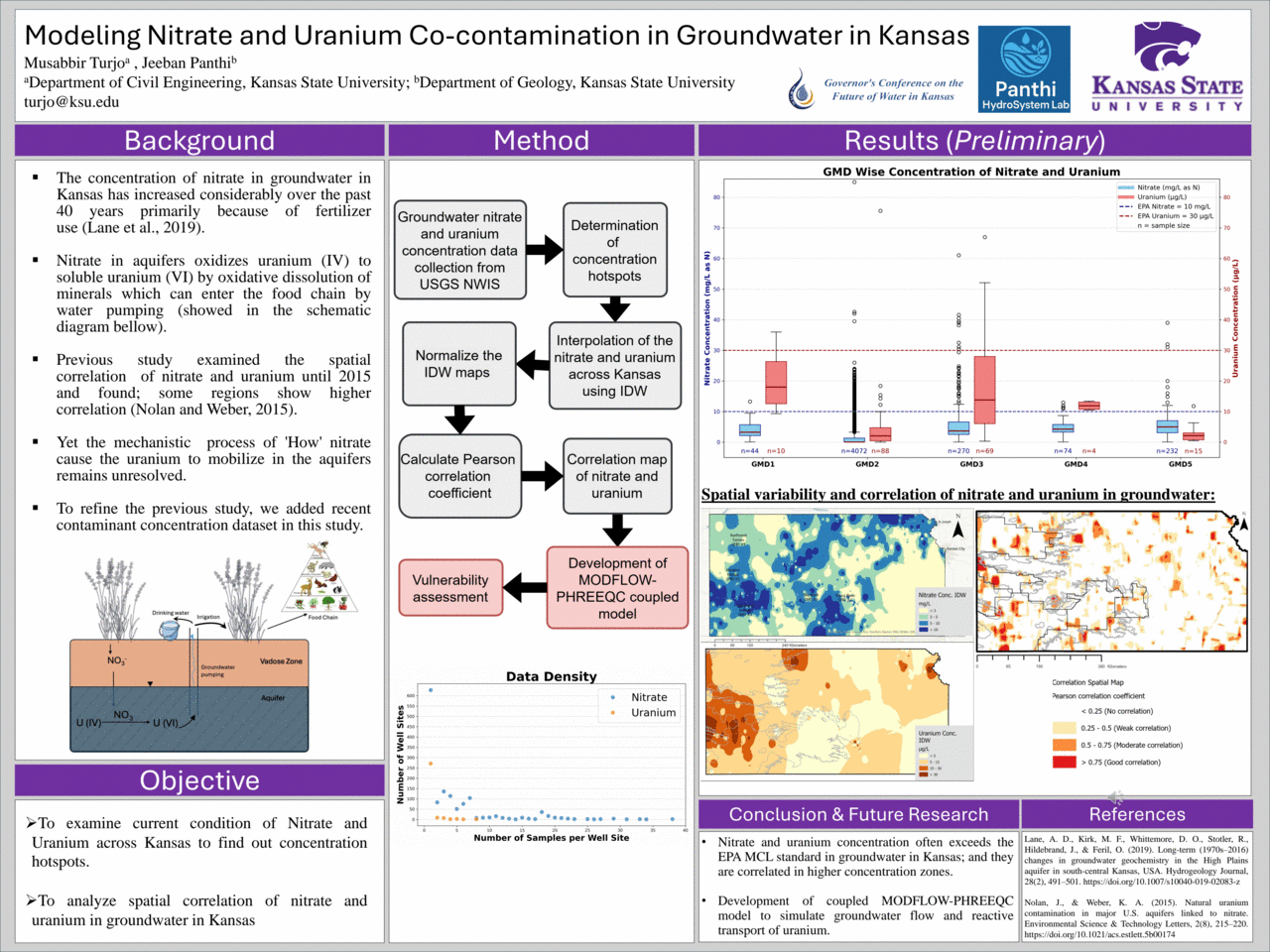
Modeling Nitrate and Uranium Co-contamination in Groundwater in Kansas
Musabbir Turjo, Jeeban Panthi
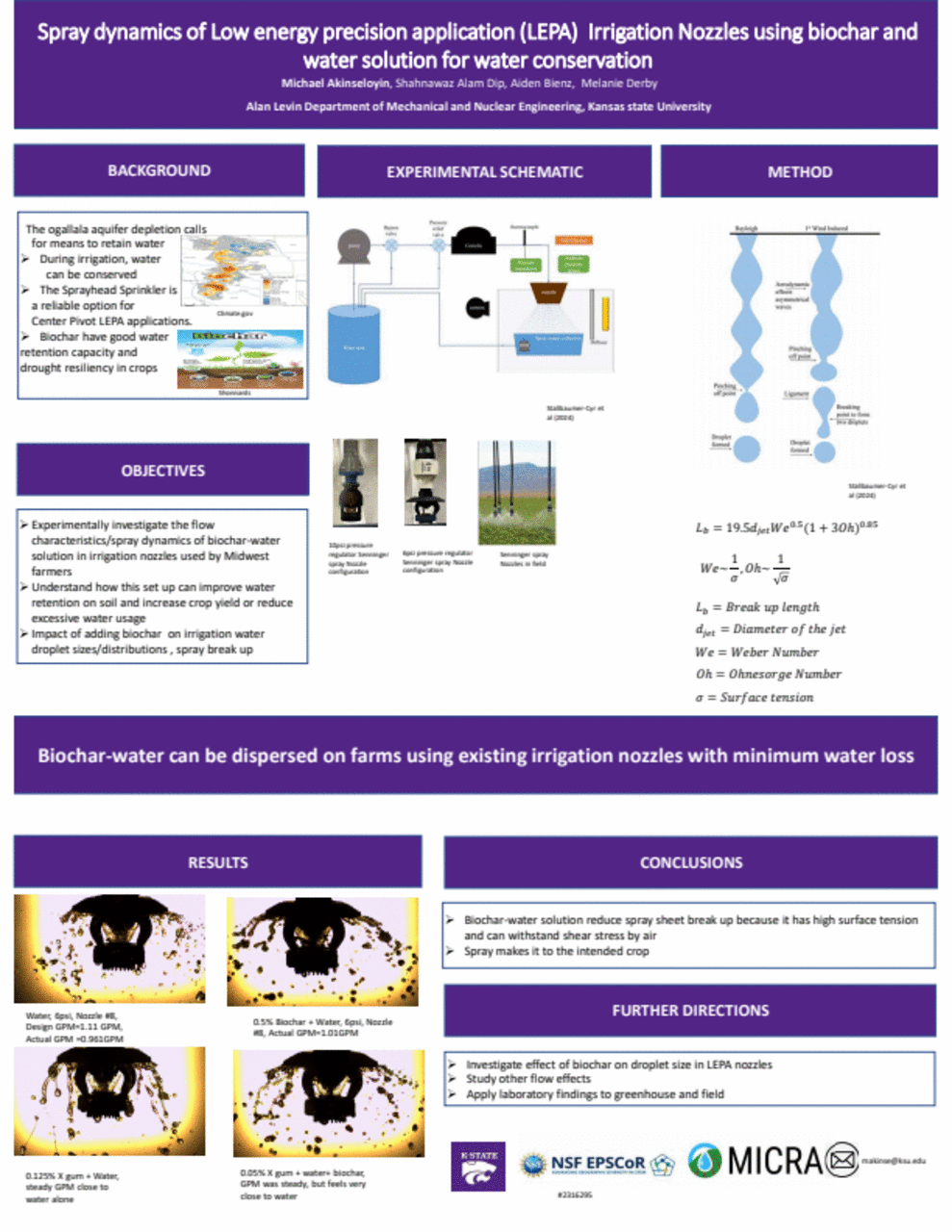
Spray dynamics of Low energy precision application (LEPA) Irrigation Nozzles using biochar and water solution for water conservation
Michael Akinseloyin, Shahnawaz Alam Dip, Aiden Bienz, Melanie Derby
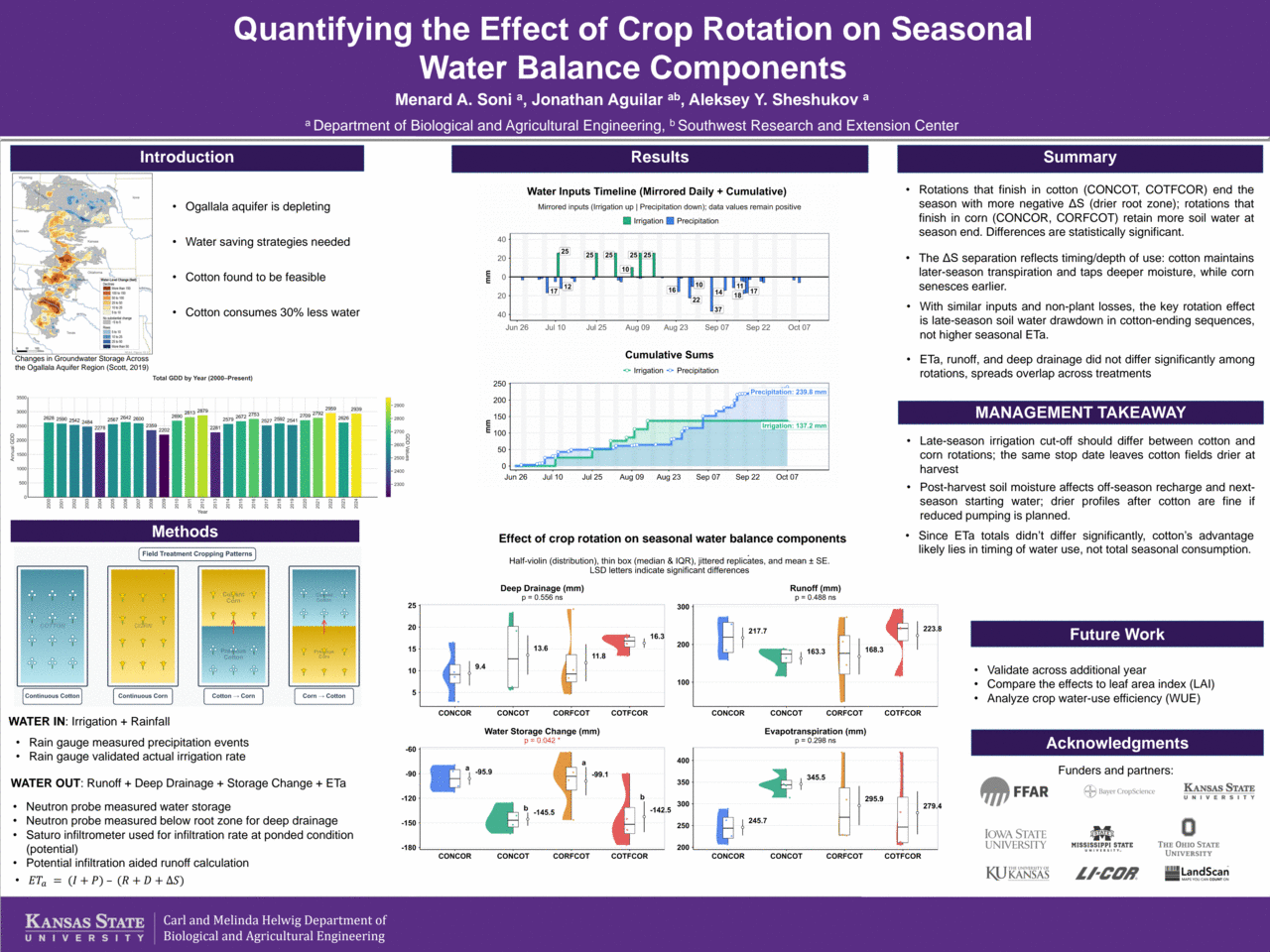
Quantifying the Effect of Crop Rotation on Seasonal Water Balance Components
Menard Soni, Jonathan Aguilar, Aleksey Sheshukov
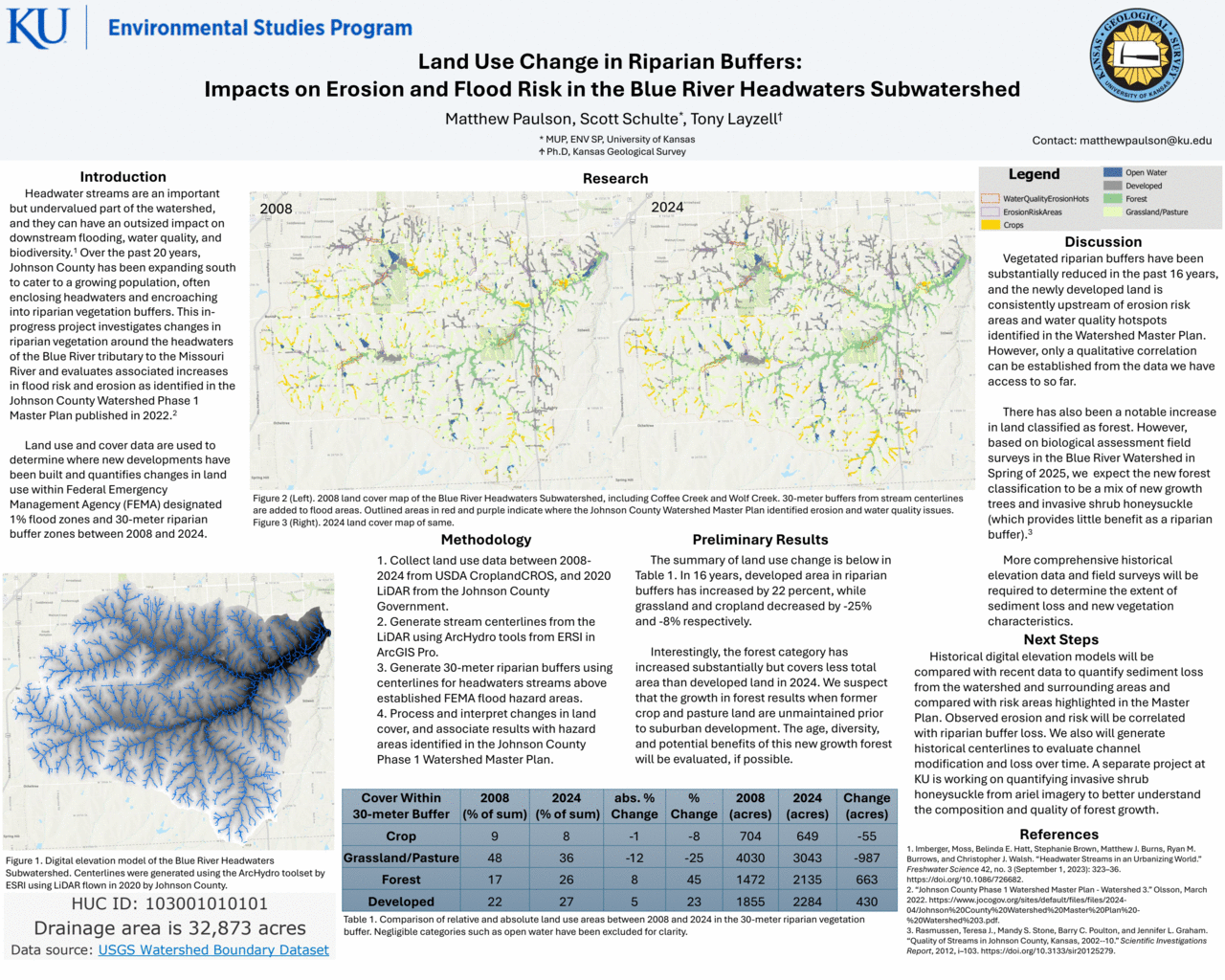
Land Use Change in Riparian Buffers: Impacts on Erosion and Flood Risk in the Blue River Headwaters Subwatershed
Matthew Paulson, Scott Schulte, Tony Layzell
Land use and cover data are used to determine where new developments have been built and quantifies changes in land use within Federal Emergency Management Agency (FEMA) designated 1% flood zones and 30-meter riparian buffer zones between 2008 and 2024.
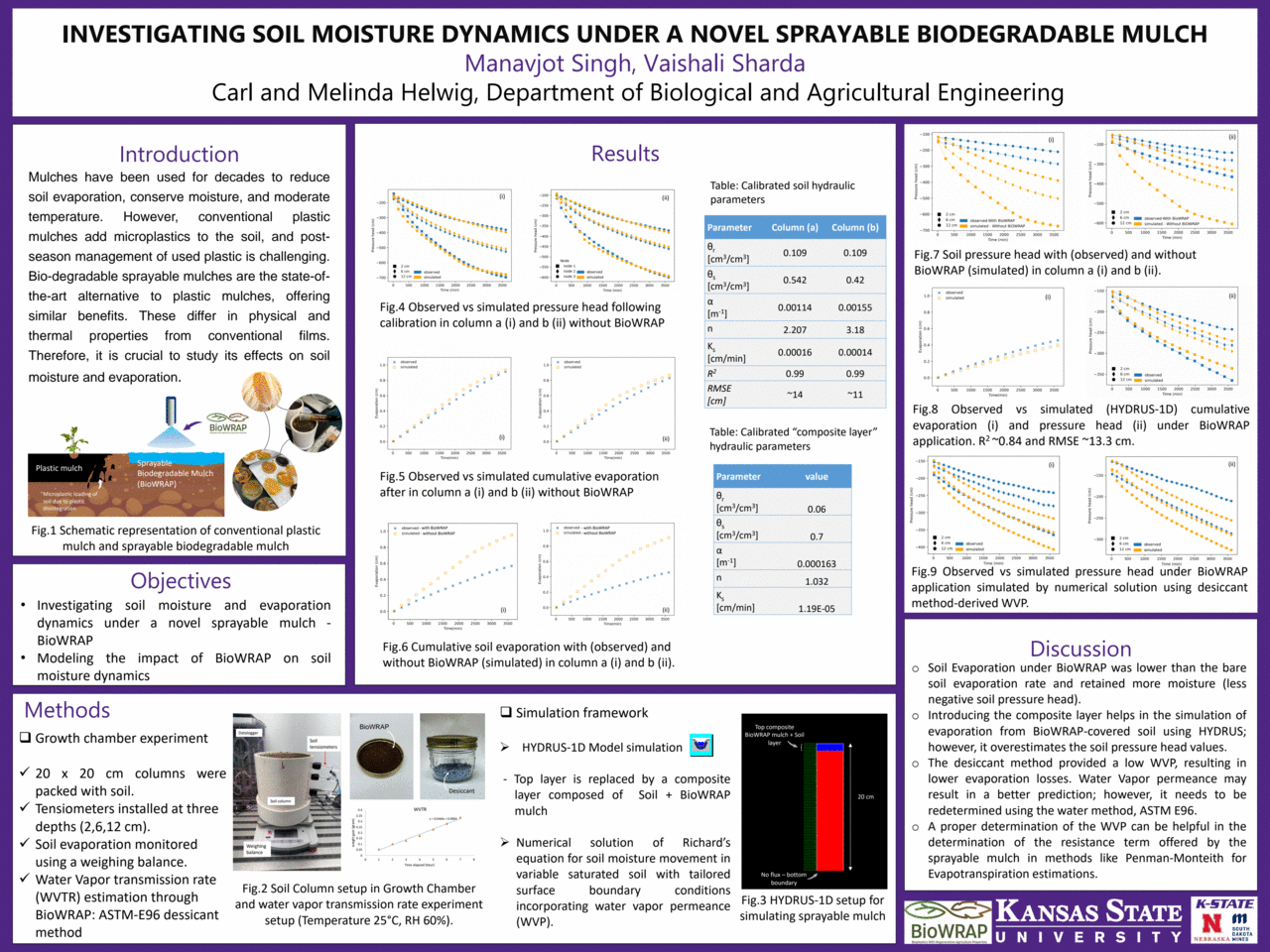
INVESTIGATING SOIL MOISTURE DYNAMICS UNDER A NOVEL SPRAYABLE BIODEGRADABLE MULCH
Manavjot Singh, Vaishali Sharda
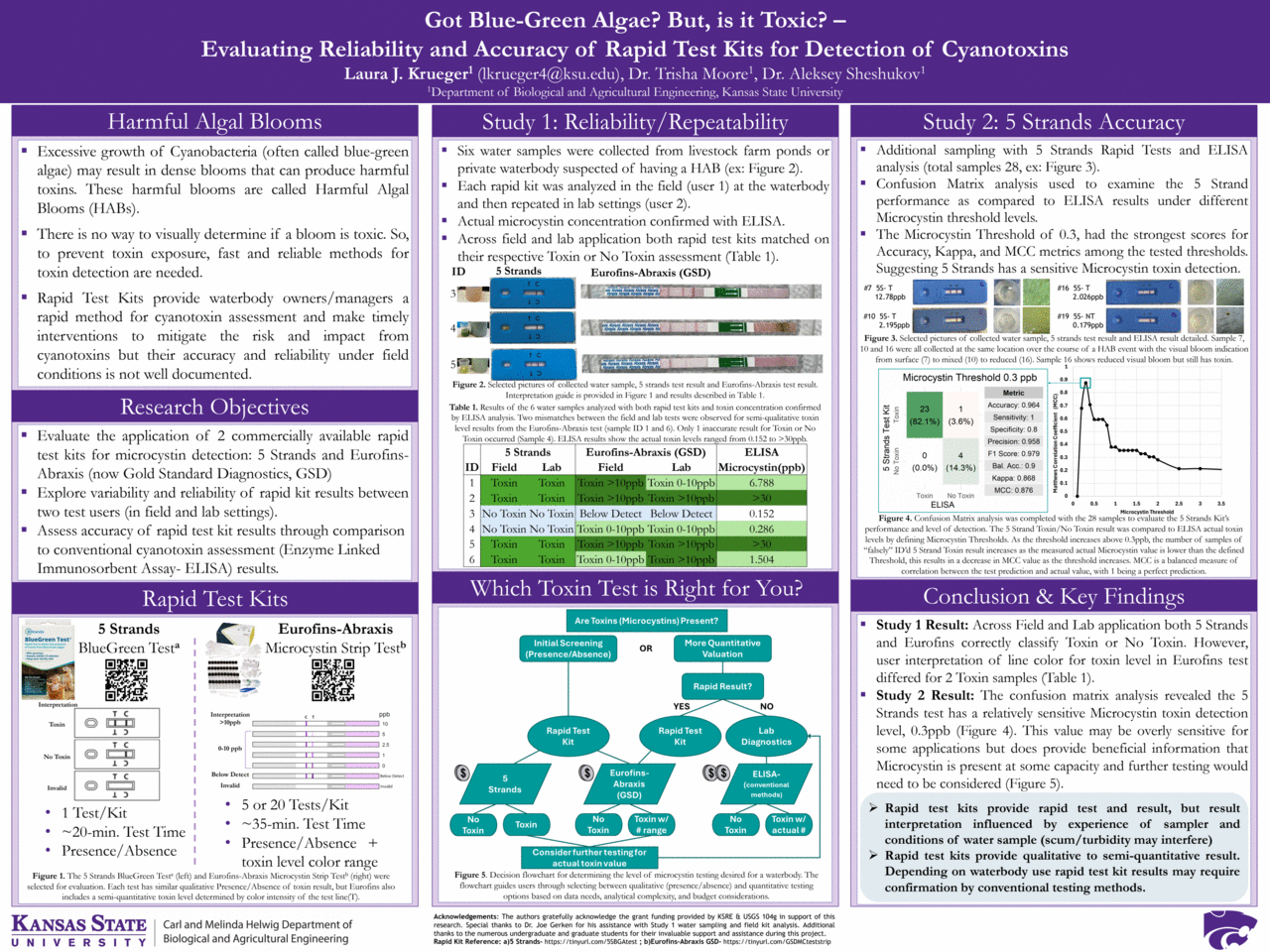
Got Blue-Green Algae? But, is it Toxic? – Evaluating Reliability and Accuracy of Rapid Test Kits for Detection of Cyanotoxins
Laura Krueger, Dr. Trisha Moore, Dr. Aleksey Sheshukov
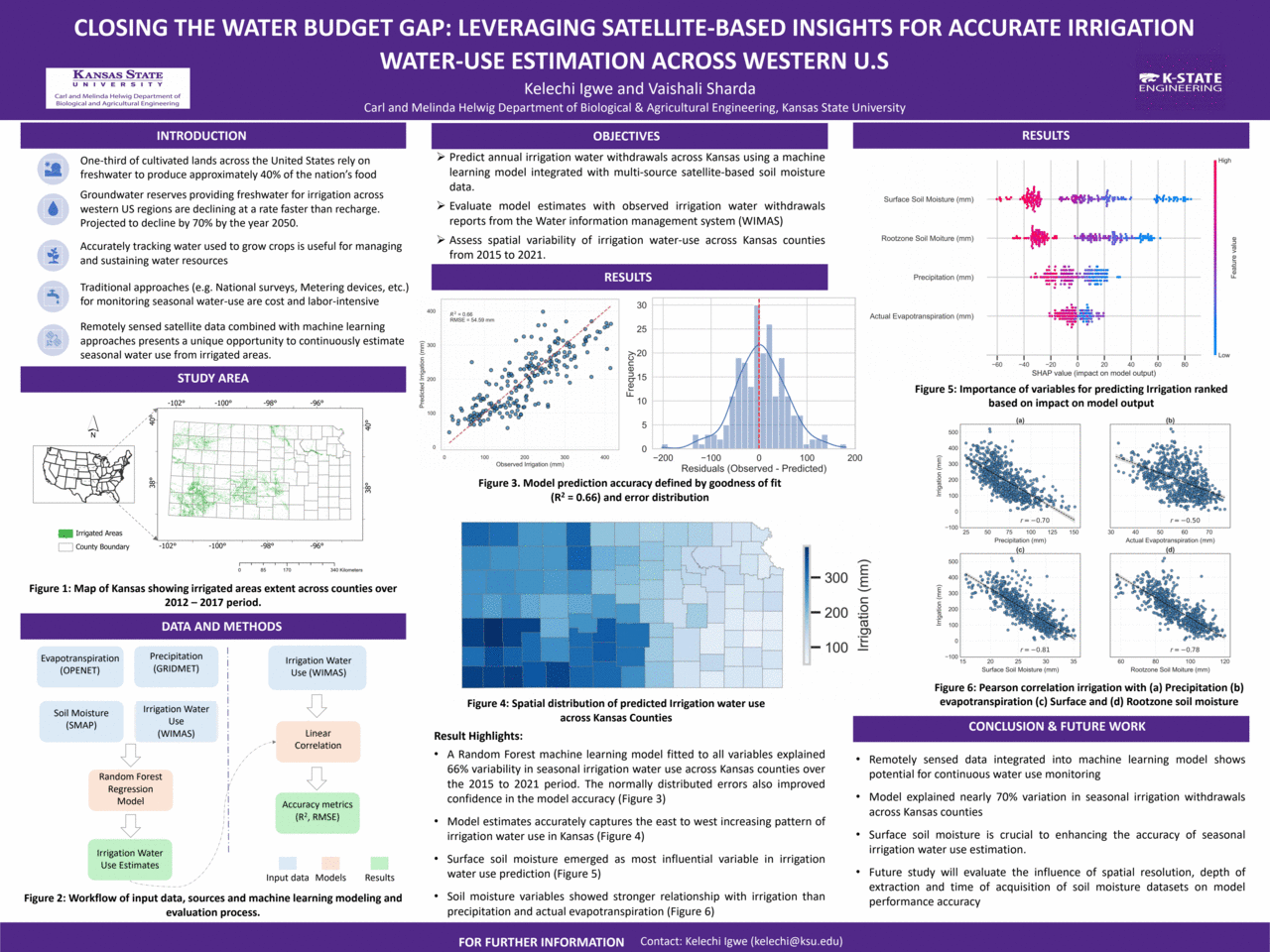
Closing the Water Budget Gap: Leveraging Satellite-Based Insights for Accurate Irrigation Water-Use Estimation Across Western U.S
Kelechi Igwe, Vaishali Sharda
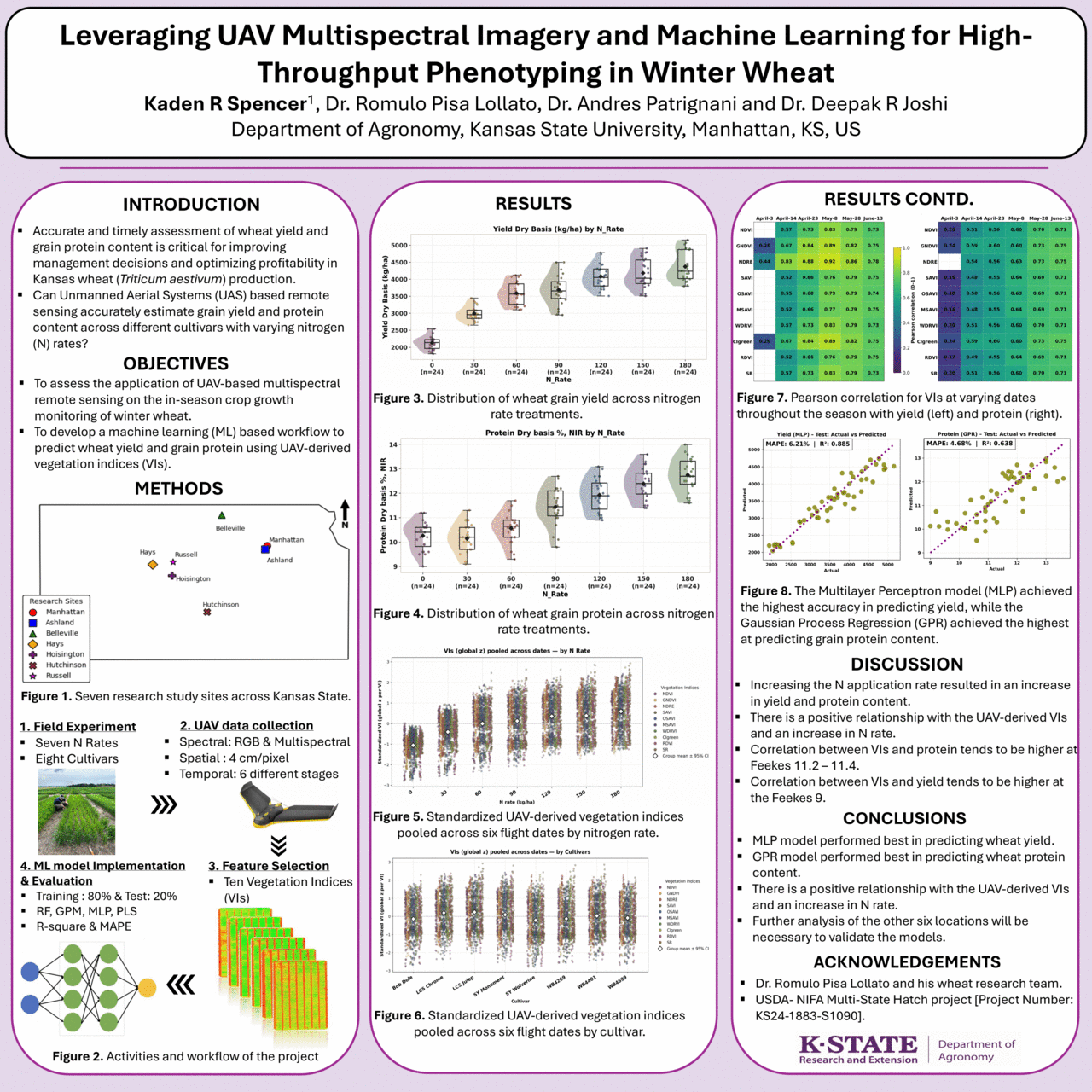
Leveraging UAV Multispectral Imagery and Machine Learning for High- Throughput Phenotyping in Winter Wheat
Kaden Spencer, Dr. Romulo Pisa Lollato, Dr. Andres Patrignani and Dr. Deepak R Joshi
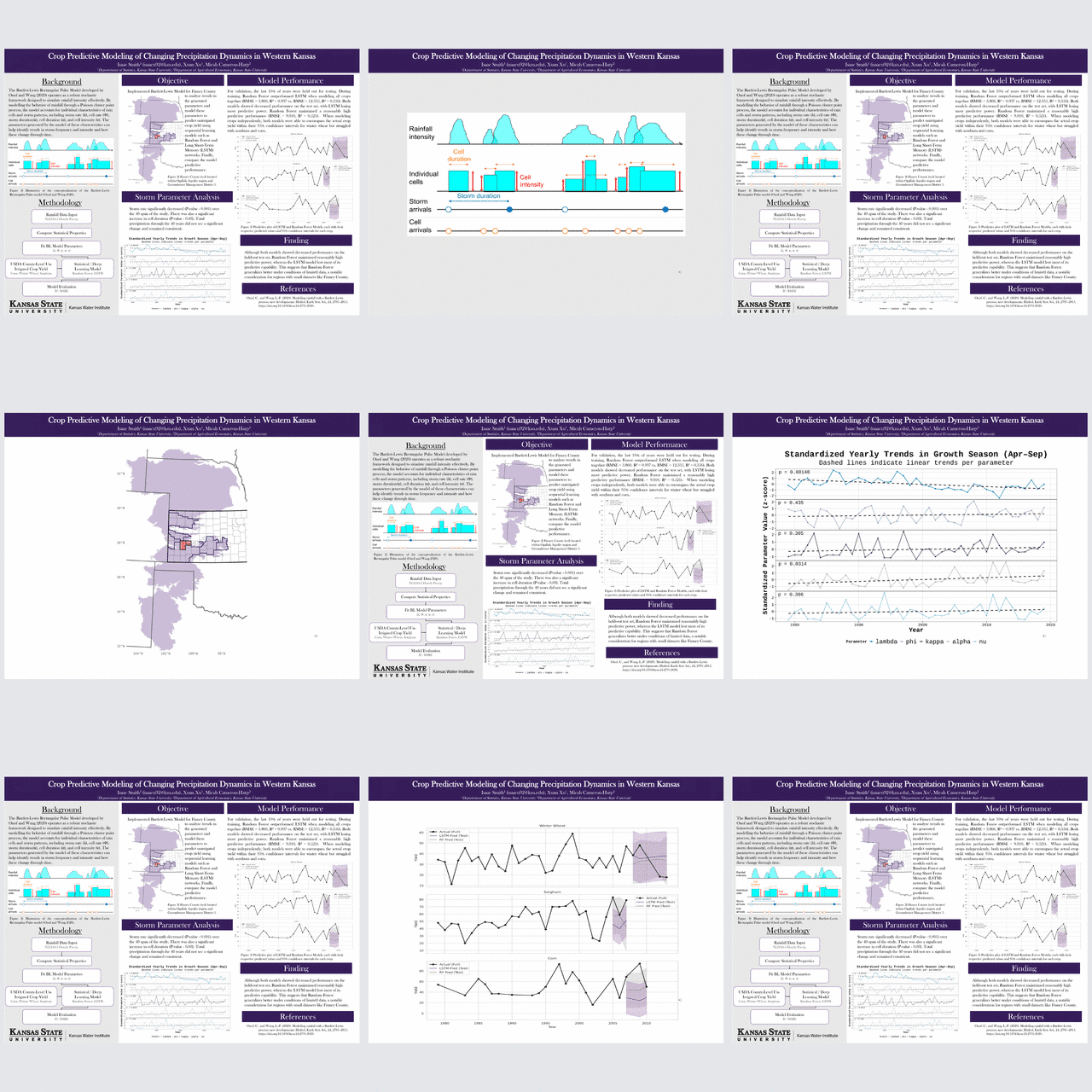
Crop Predictive Modeling of Changing Precipitation Dynamics in Western Kansas
Isaac Smith, Xuan Xu, Micah Cameron-Harp
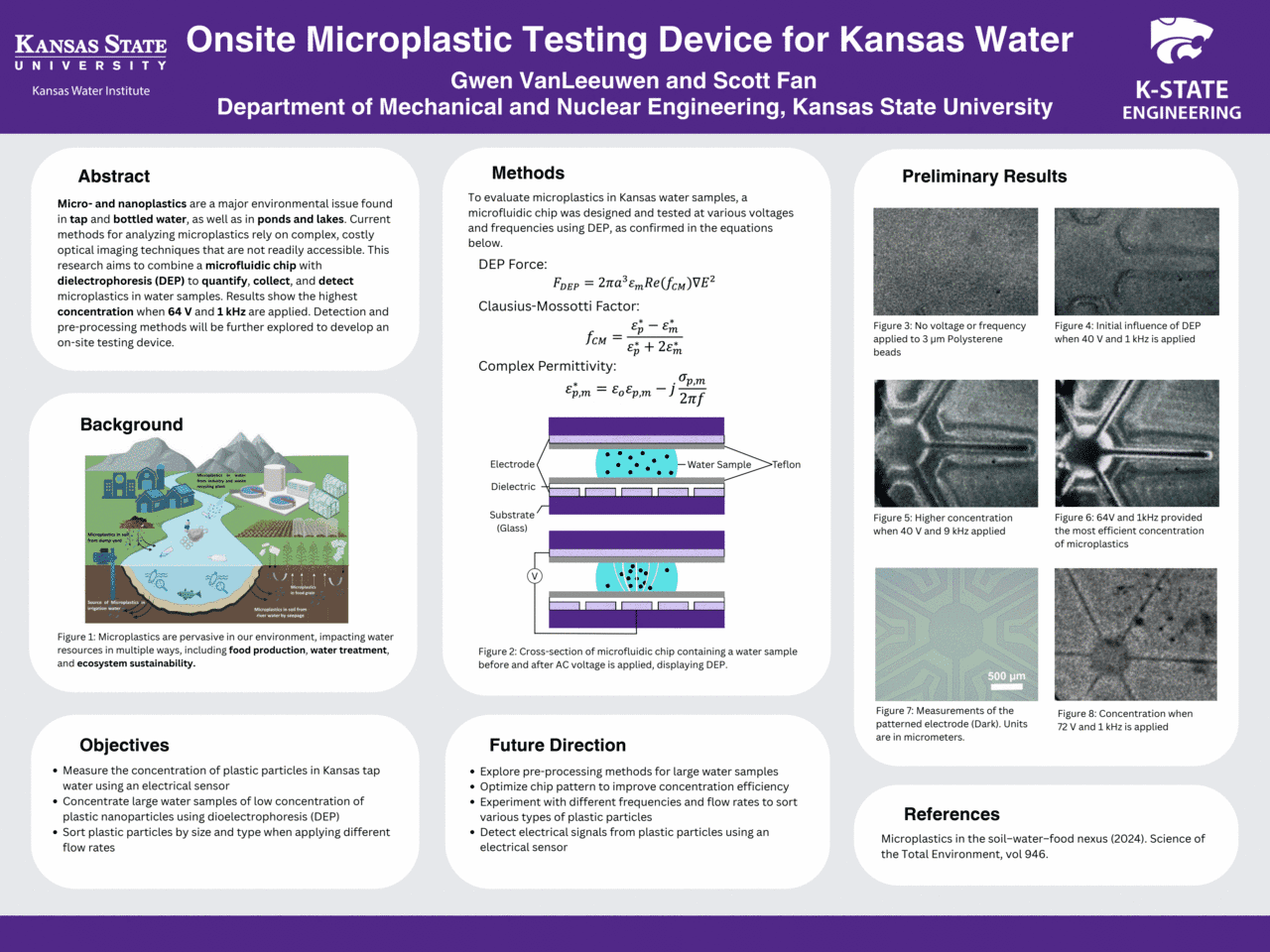
Onsite Microplastic Testing Device for Kansas Water
Gwyneth VanLeeuwen, Scott Fan
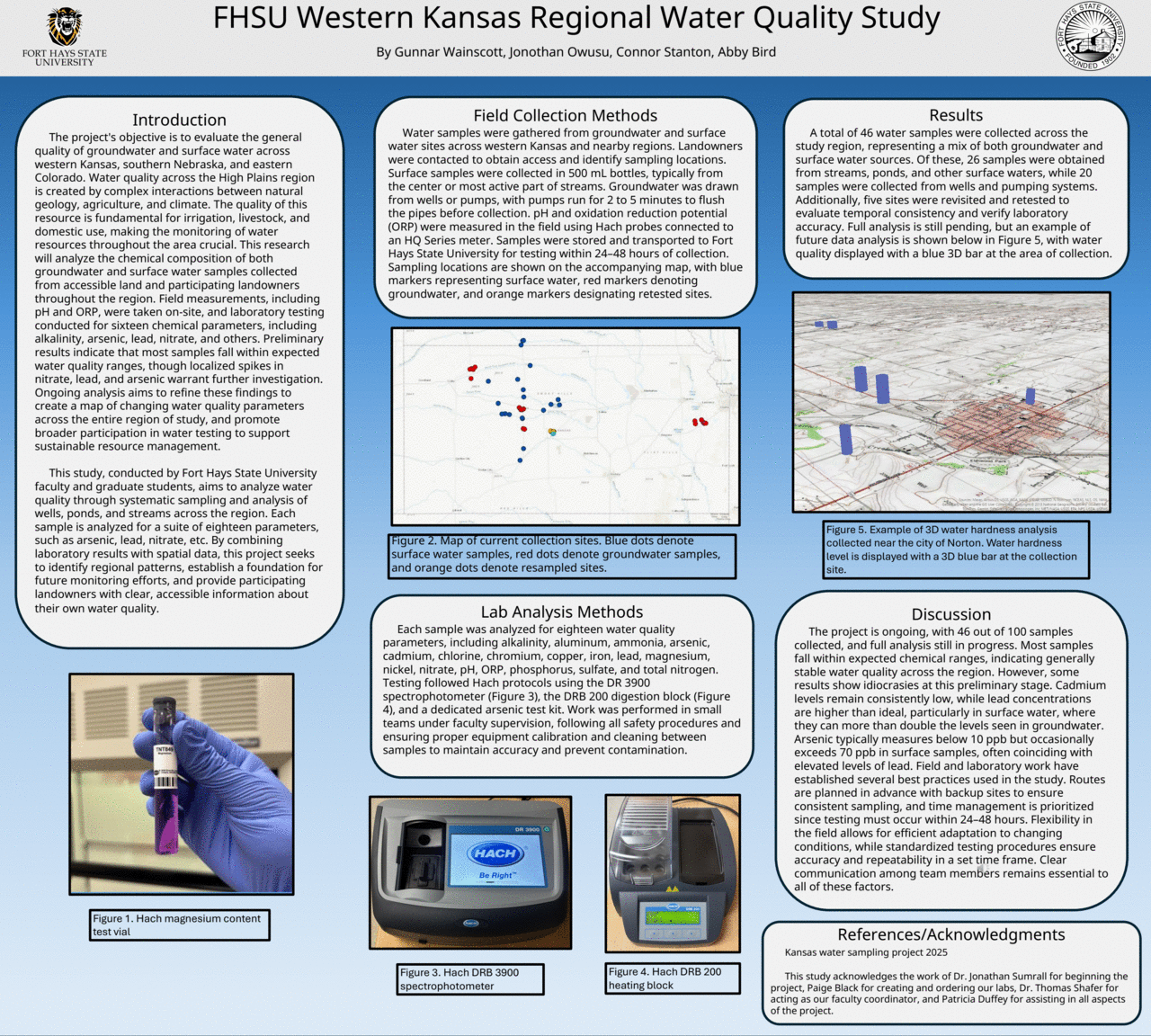
FHSU Western Kansas Regional Water Quality Study
Gunnar Wainscott, Jonothan Owusu, Connor Stanton, Abby Bird
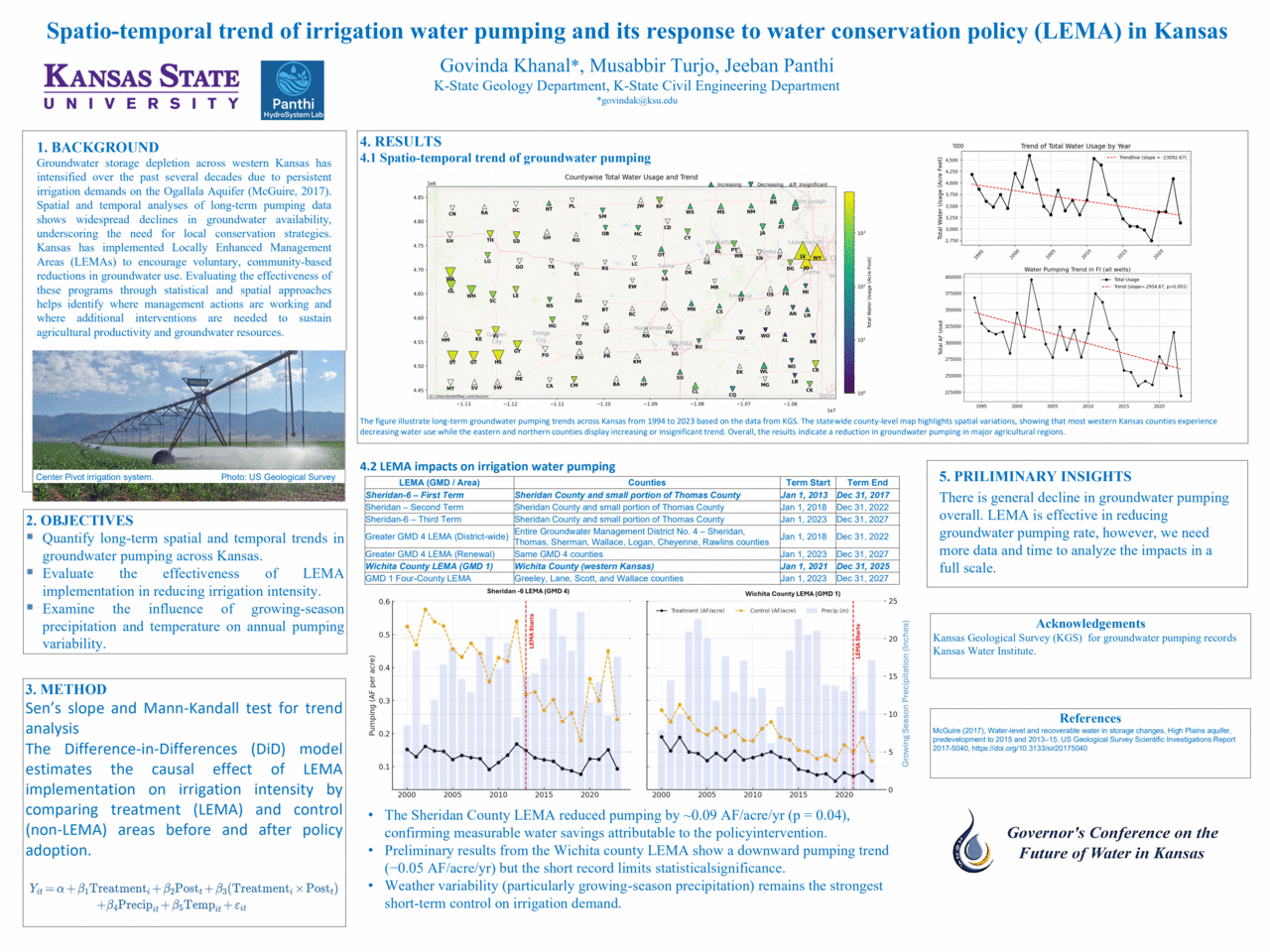
Spatio-temporal trend of irrigation water pumping and its response to water conservation policy (LEMA) in Kansas
Govinda Khanal, Musabbir Turjo, Jeeban Panthi
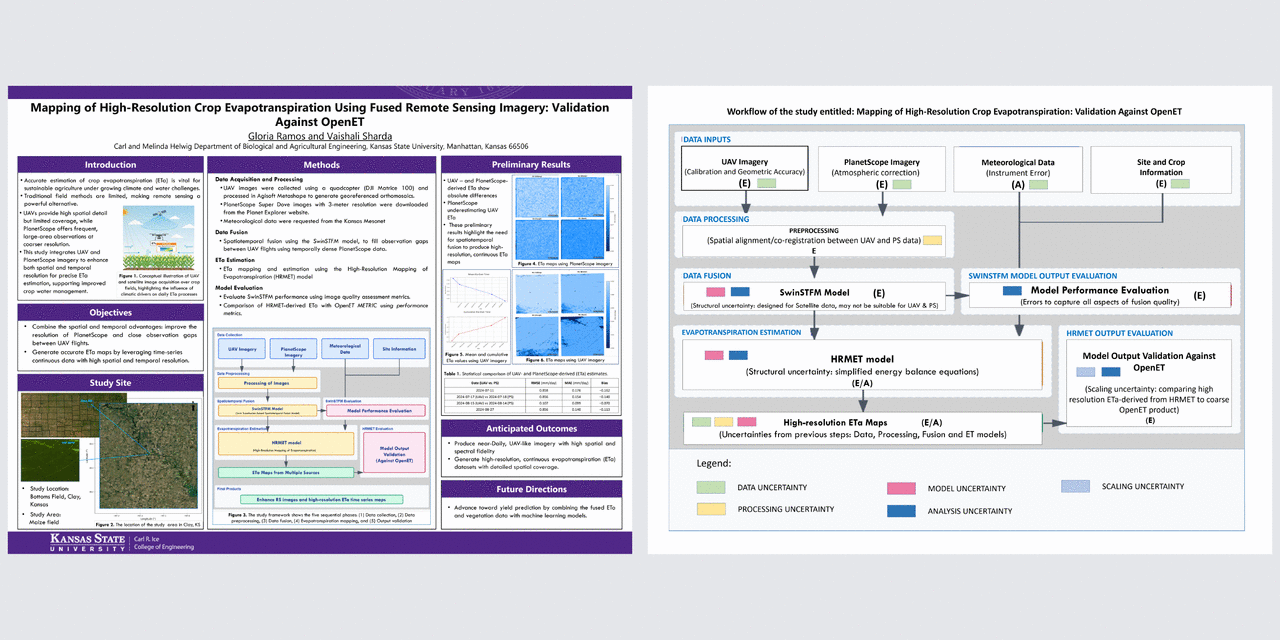
Mapping of High-Resolution Crop Evapotranspiration Using Fused Remote Sensing Imagery: Validation Against OpenET
Gloria Ramos, Vaishali Sharda
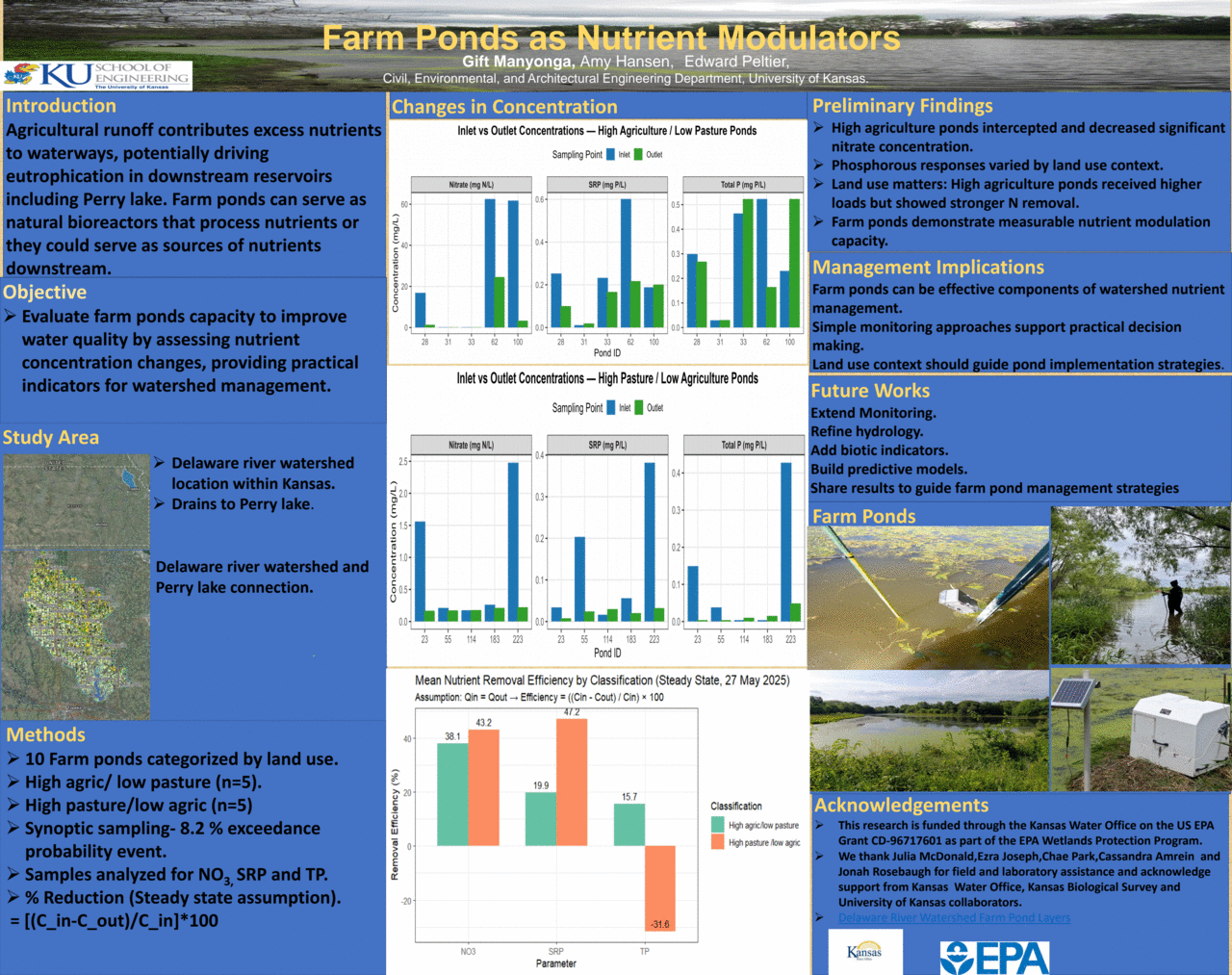
Farm ponds as nutrient modulators
Gift Manyonga, Amy Hansen, Edward Peltier
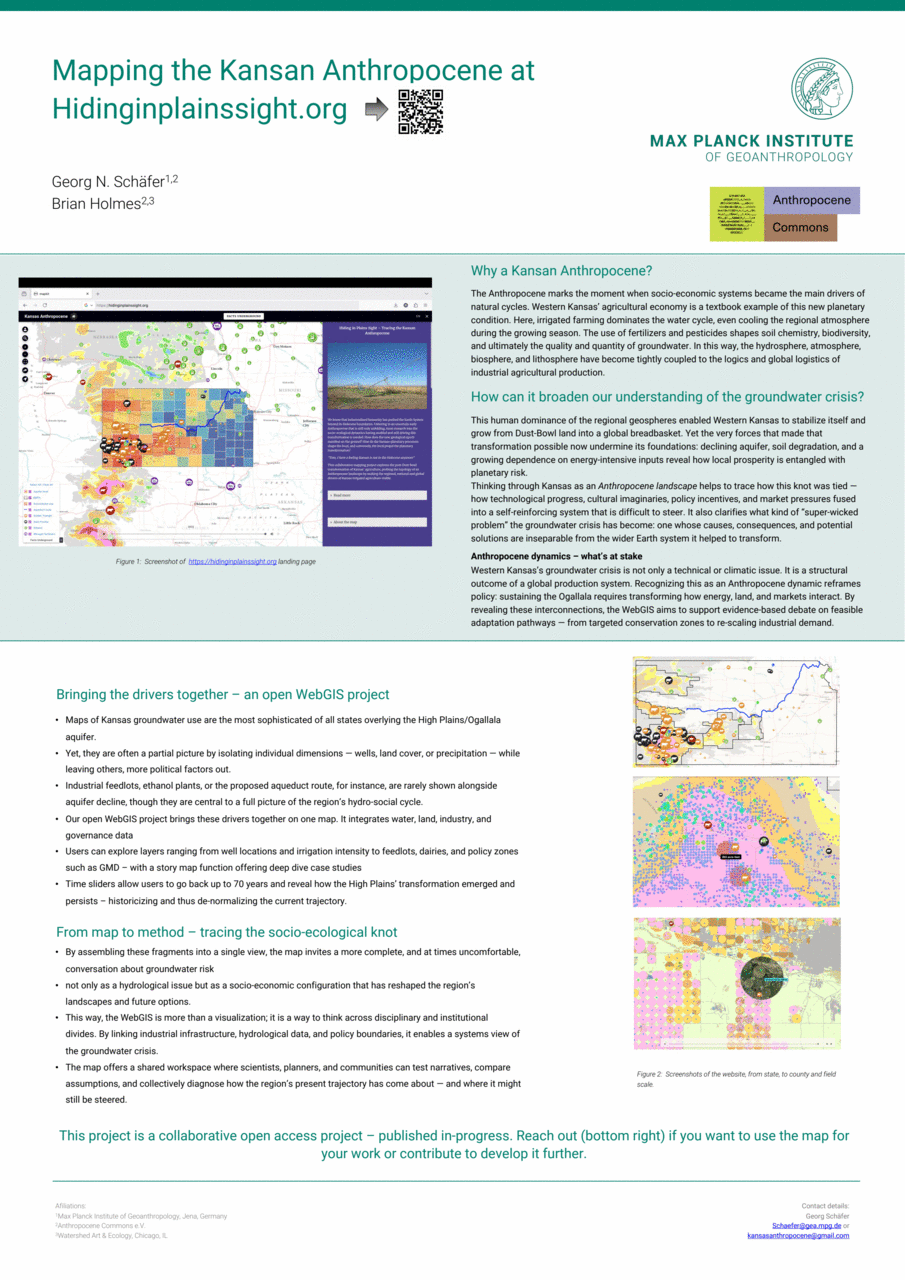
Mapping the Kansan Anthropocene at Hidinginplainssight.org
George N. Schaffer, Brian Holmes
The platform links public datasets—ranging from USGS and KGS well records to satellite-based land-cover data—with additional layers and case studies that highlight political and economic drivers, including Groundwater Management Districts, corporate ownership networks, and large-scale livestock and processing facilities. By situating biophysical change within its institutional context, the map seeks to support research, public understanding, and informed discussion about the future of water in Kansas.
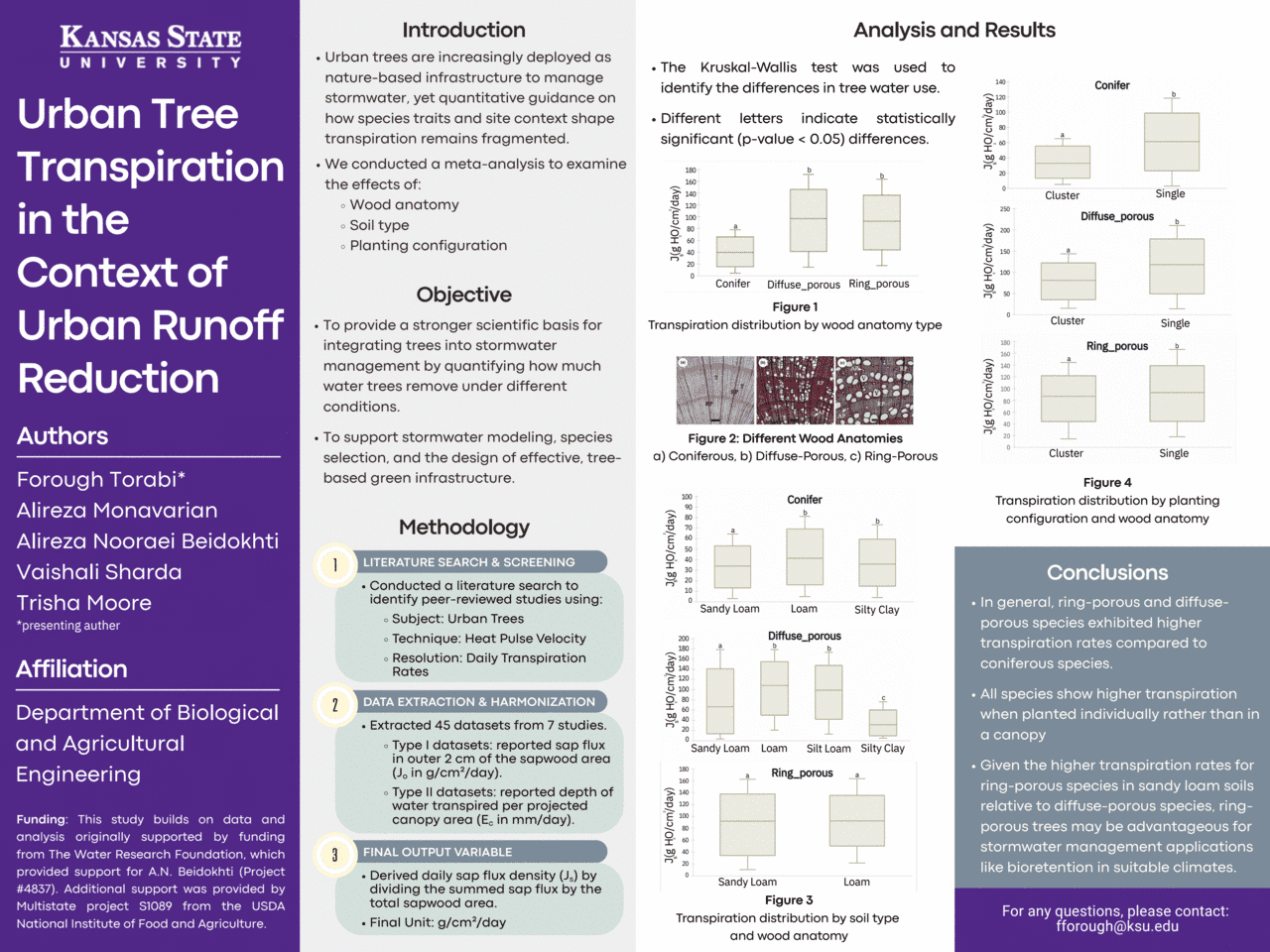
Urban Tree Transpiration in the Context of Urban Runoff Reduction
Forough Torabi, Alireza Monavarian, Alireza Nooraei Beidokhti, Vaishali Sharda, Trisha Moore

Flood History and Future Flood Prediction of Big Creek, Hays (Kansas)
Fama Dia
Major floods in Hays occurred in 1947,1951, 1957, 1965, 1993 and 2019 with discharge peaks often exceeding 70cfs, The 1951 flood remains one of the highest historical peaks, causing widespread inundation around FHSU area With a discharge of 238.2 cfs ( cubic feet per second) The latest flood event that occurred was in 2019 with a discharge of 110 cfs ( cubic feet per second) . However, the variability of rainfall makes the occurrence of the next flood uncertain. By analyzing previous discharge data, we to predict future flood event in order to anticipate and better prepare for it.
In this study, we will examine flood events between 1947 and 2024 by organizing discharge data from this period, identifying the recurrence intervals of significant floods, and generating a flood frequency curve. The flood frequency curve will help us predict future flood occurrences around the university, allowing for better event planning and improved mitigation strategies.
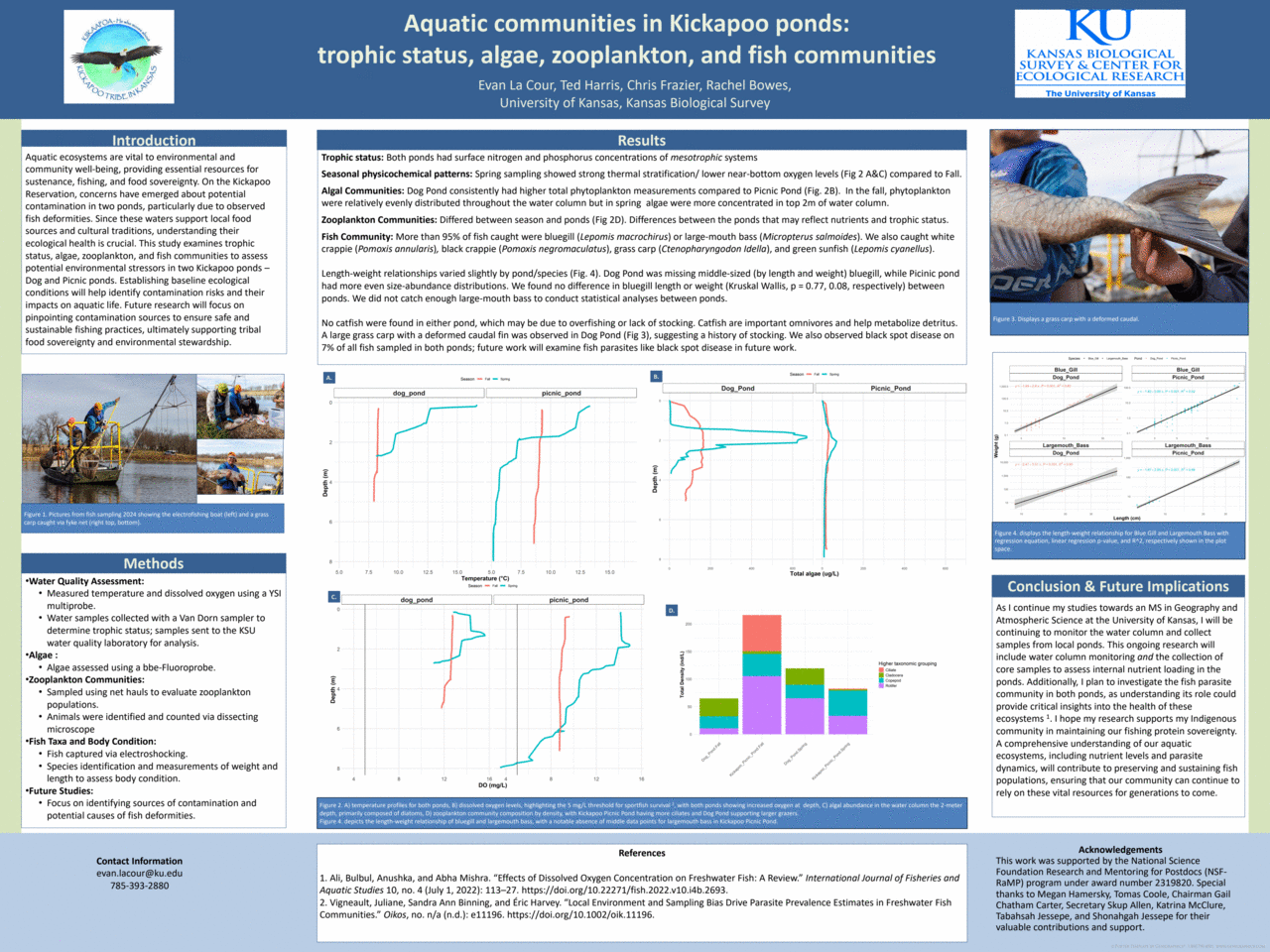
Aquatic communities in Kickapoo Ponds, Trophic Status, Algae, Zooplankton
Evan La Cour, Ted Harris, Chris Frazier, Rachel Bowes
Field methods included YSI multiprobe profiling of temperature, dissolved oxygen, and pH; nutrient analysis of discrete water samples; characterization of algal biomass using a bbe-Fluoroprobe; and zooplankton community assessments through net hauls and microscopic identification. Fish communities were evaluated using electroshocking surveys, followed by measurements of species composition, size structure, and external condition metrics.
Both ponds exhibited mesotrophic nutrient concentrations and seasonal stratification. Dog Pond consistently supported higher phytoplankton biomass, and its bluegill population appeared skewed toward smaller individuals, while Picnic Pond displayed a more even size distribution. Across both systems, observations of fin deformities and black spot disease suggest underlying ecological stressors.
These early findings warrant further investigation into contaminant pathways and parasite dynamics. Continued collaboration with the Kickapoo Tribe will guide management approaches that protect fish safety, improve ecological resilience, and uphold Tribal fishing traditions essential to cultural identity and long-term food sovereignty.
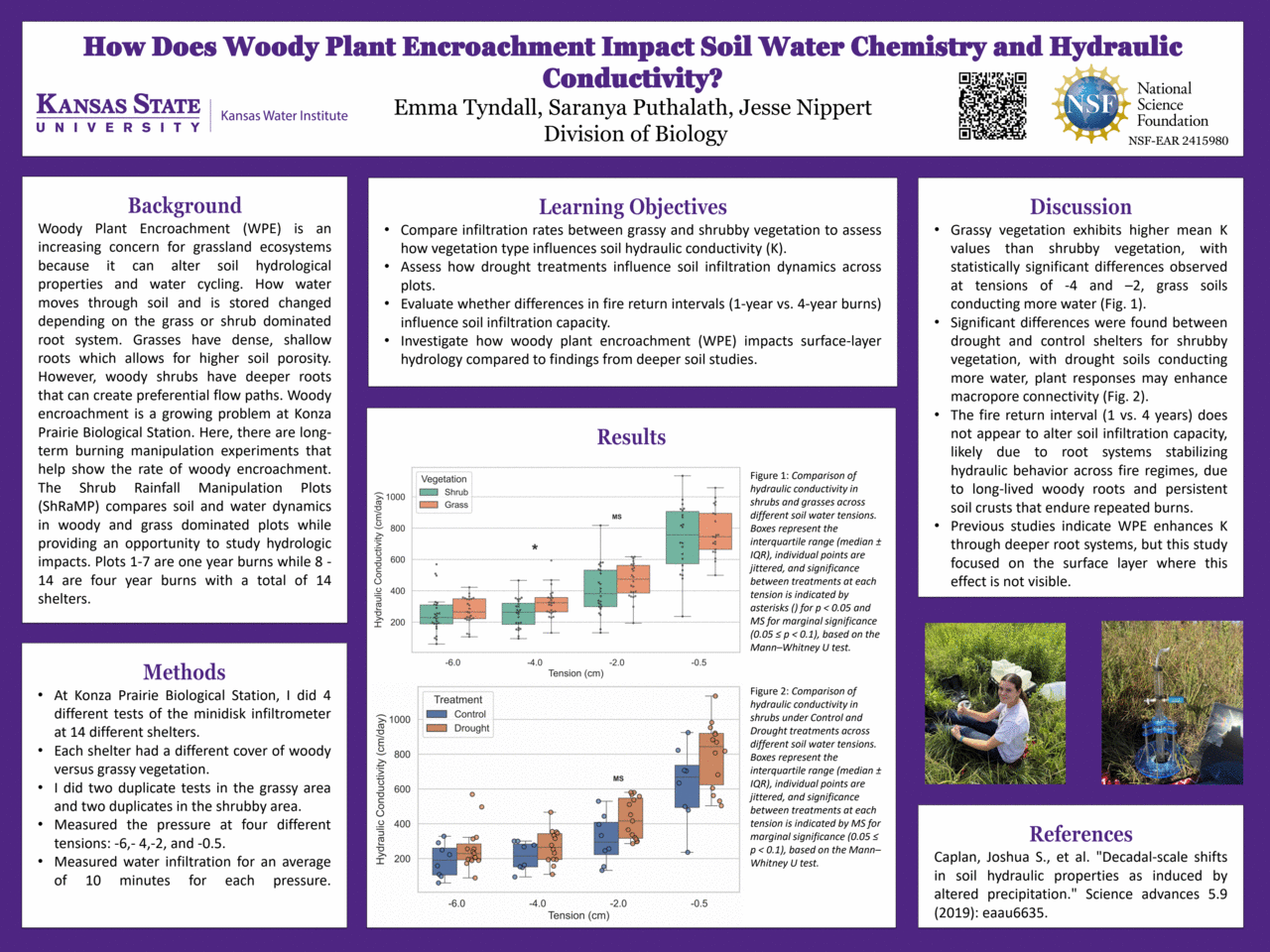
How Does Woody Plant Encroachment Impact Soil Water Chemistry and Hydraulic Conductivity?
Emma Tyndall, Saranya Puthalath, Jesse Nippert
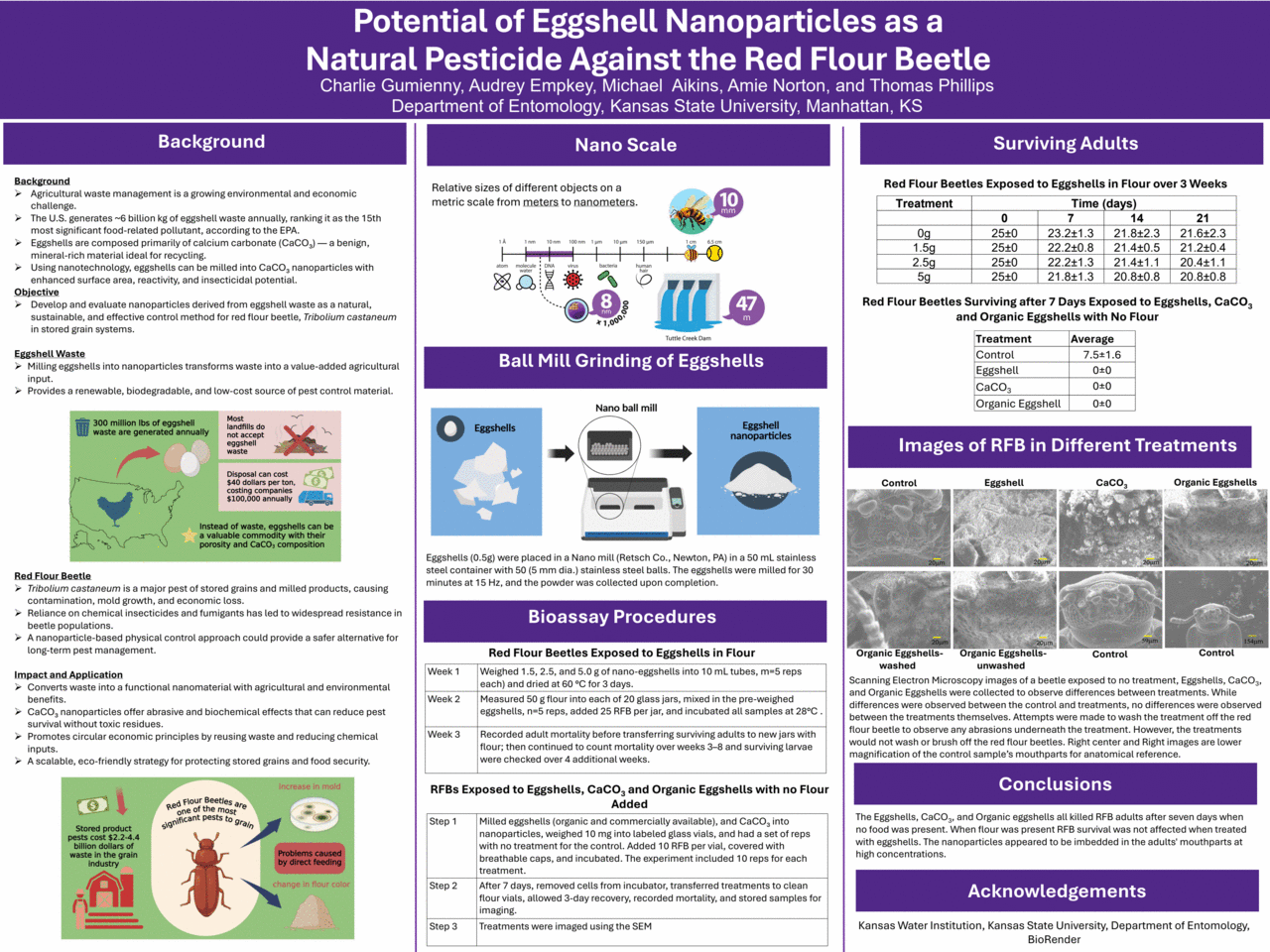
Potential of Eggshell Nanoparticles as a Natural Pesticide Against the Red Flour Beetle
Charlie Gumienny, Audrey Empkey, Michael Aikins, Amie Norton, and Thomas Phillips
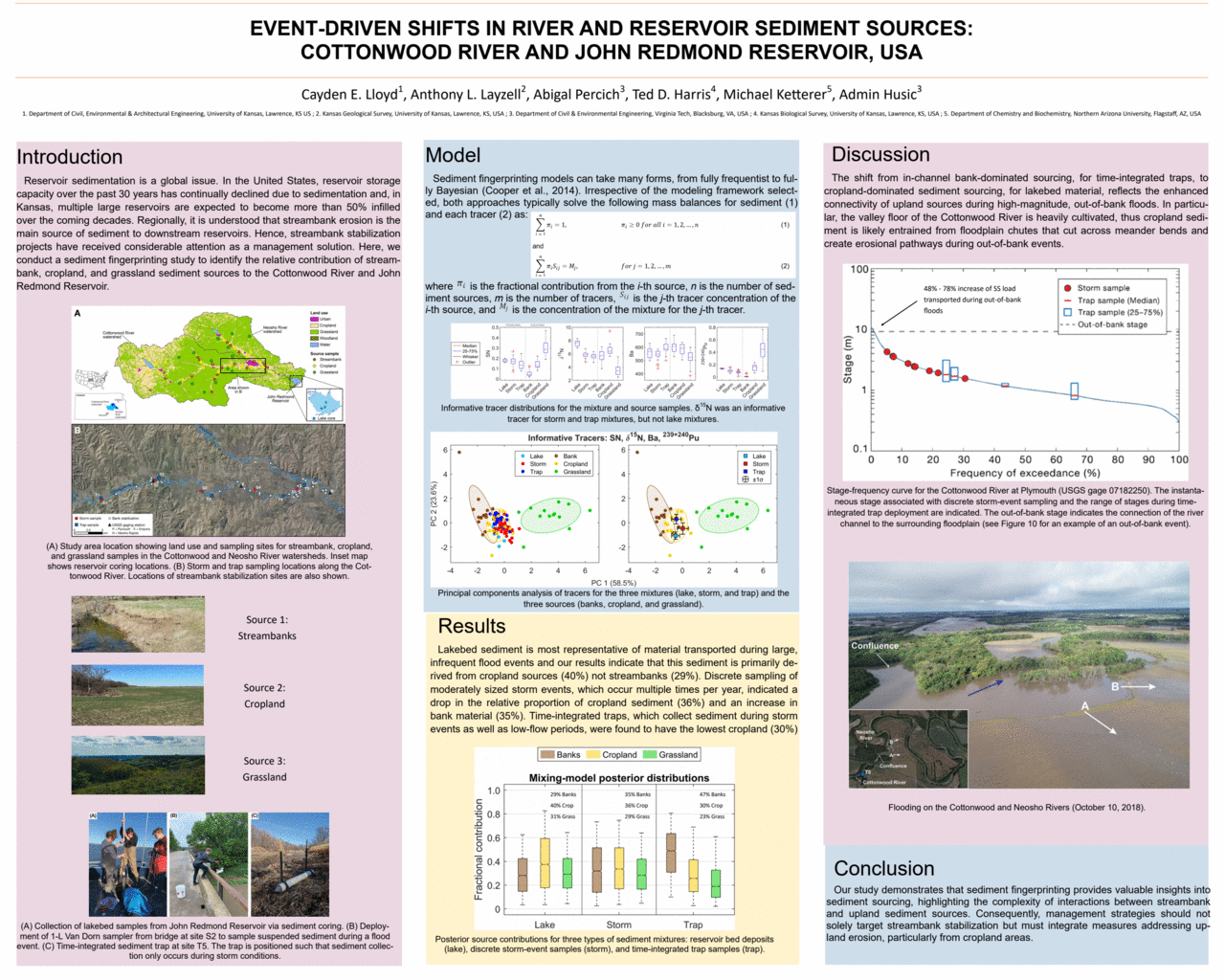
Event-driven shifts in river and reservoir sediment sources: Cottonwood River and John Redmond Reservoir, USA
Cayden Lloyd, Anthony L. Layzell, Abigail Percich, Ted D. Harris, Michael Ketterer, Admin Husic
Lakebed sediment is most representative of material transported during large, infrequent flood events and our results indicate that this sediment is primarily derived from cropland sources (40%) not streambanks (29%). Discrete sampling of moderately sized storm events, which occur multiple times per year, indicated a drop in the relative proportion of cropland sediment (36%) and an increase in bank material (35%). Time-integrated traps, which collect sediment during storm events as well as low-flow periods, were found to have the lowest cropland (30%) and greatest bank (47%) contributions.
The shift from in-channel bank-dominated sourcing, for time-integrated traps, to cropland-dominated sediment sourcing, for lakebed material, reflects the enhanced connectivity of upland sources during high-magnitude, out-of-bank floods. In particular, the valley floor of the Cottonwood River is heavily cultivated, thus cropland sediment is likely entrained from floodplain chutes that create erosional pathways during out-of-bank events.
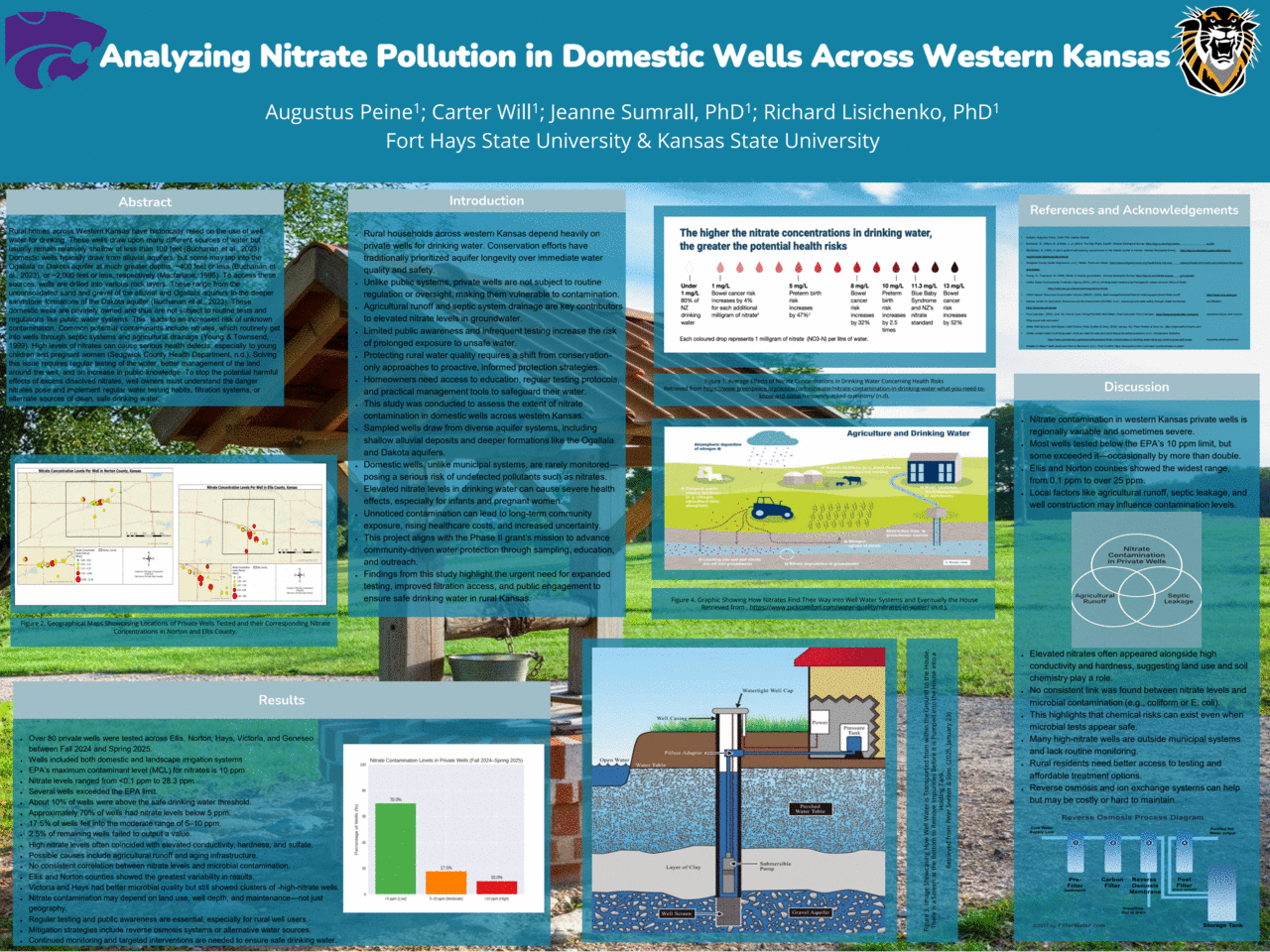
Analyzing Nitrate Pollution in Domestic Wells Across Western Kansas
Carter Will, Augustus Peine, Jeanne Sumrall, Richard Lisichenko
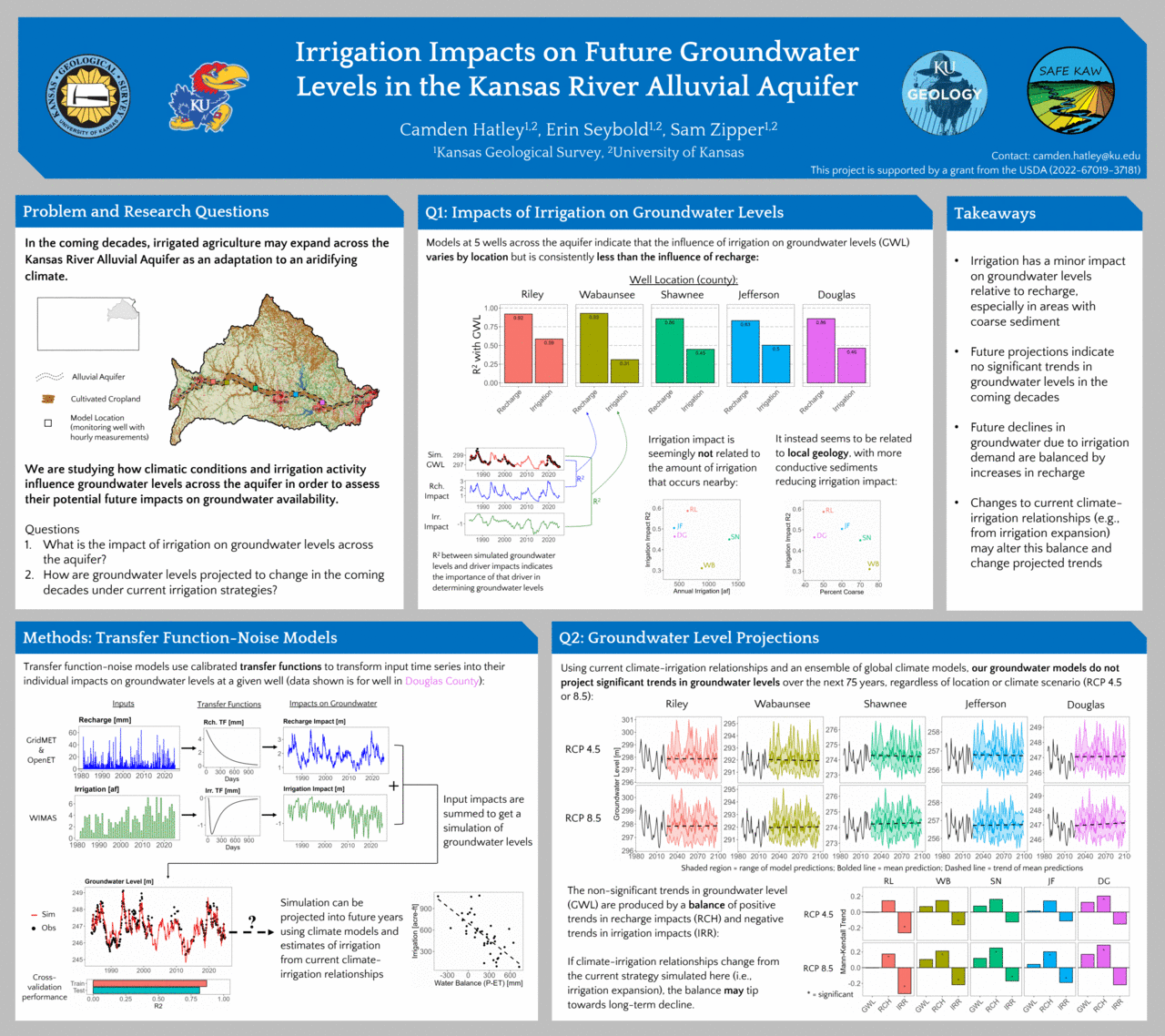
Irrigation Impacts on Future Groundwater Levels in the Kansas River Alluvial Aquifer
Camden Hatley, Erin Seybold, Sam Zipper
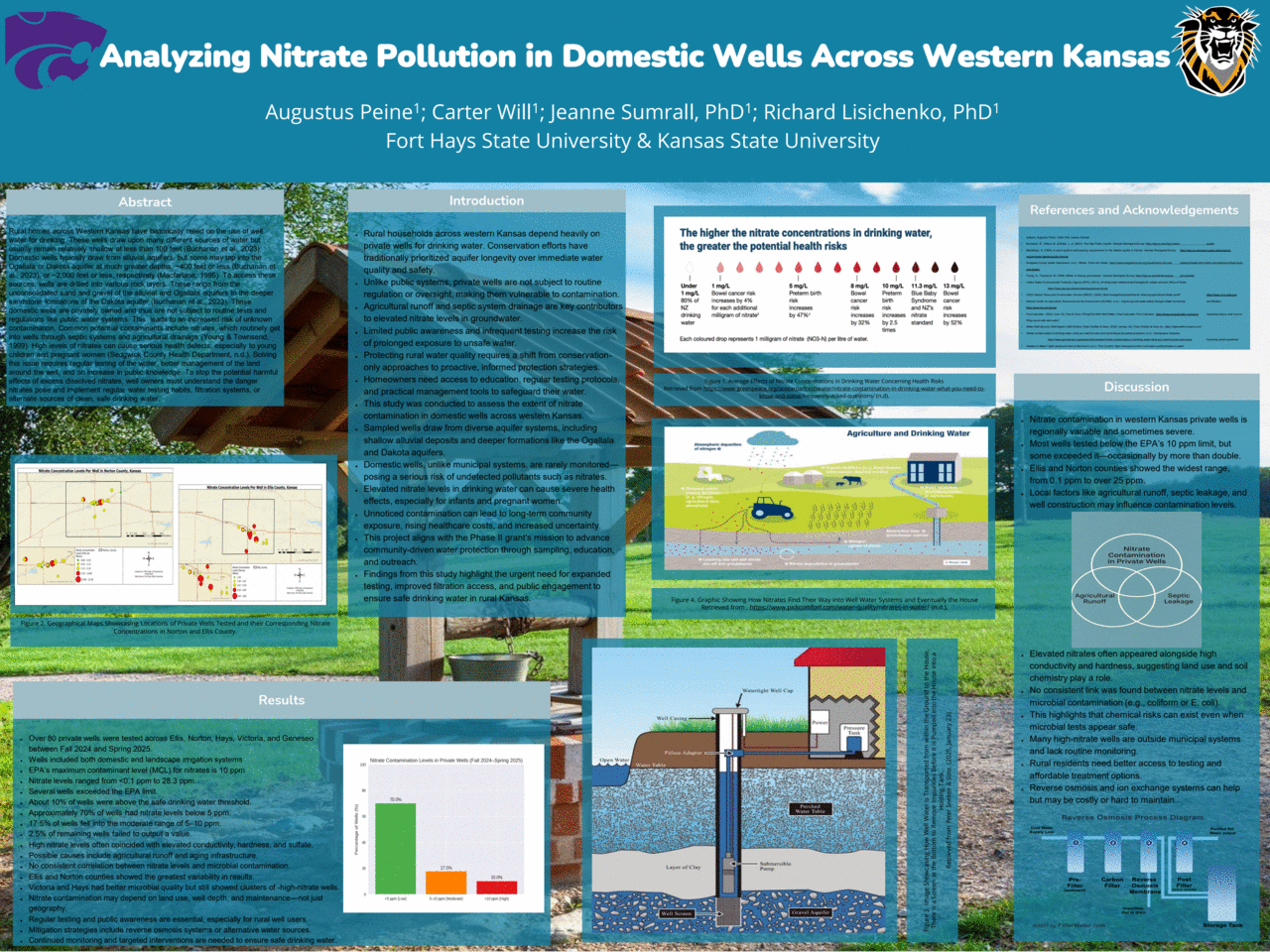
Analyzing Nitrate Pollution in Domestic Wells Across Western Kansas
Augustus Peine, Carter Will, Jeanne Sumrall, Richard Lisichenko
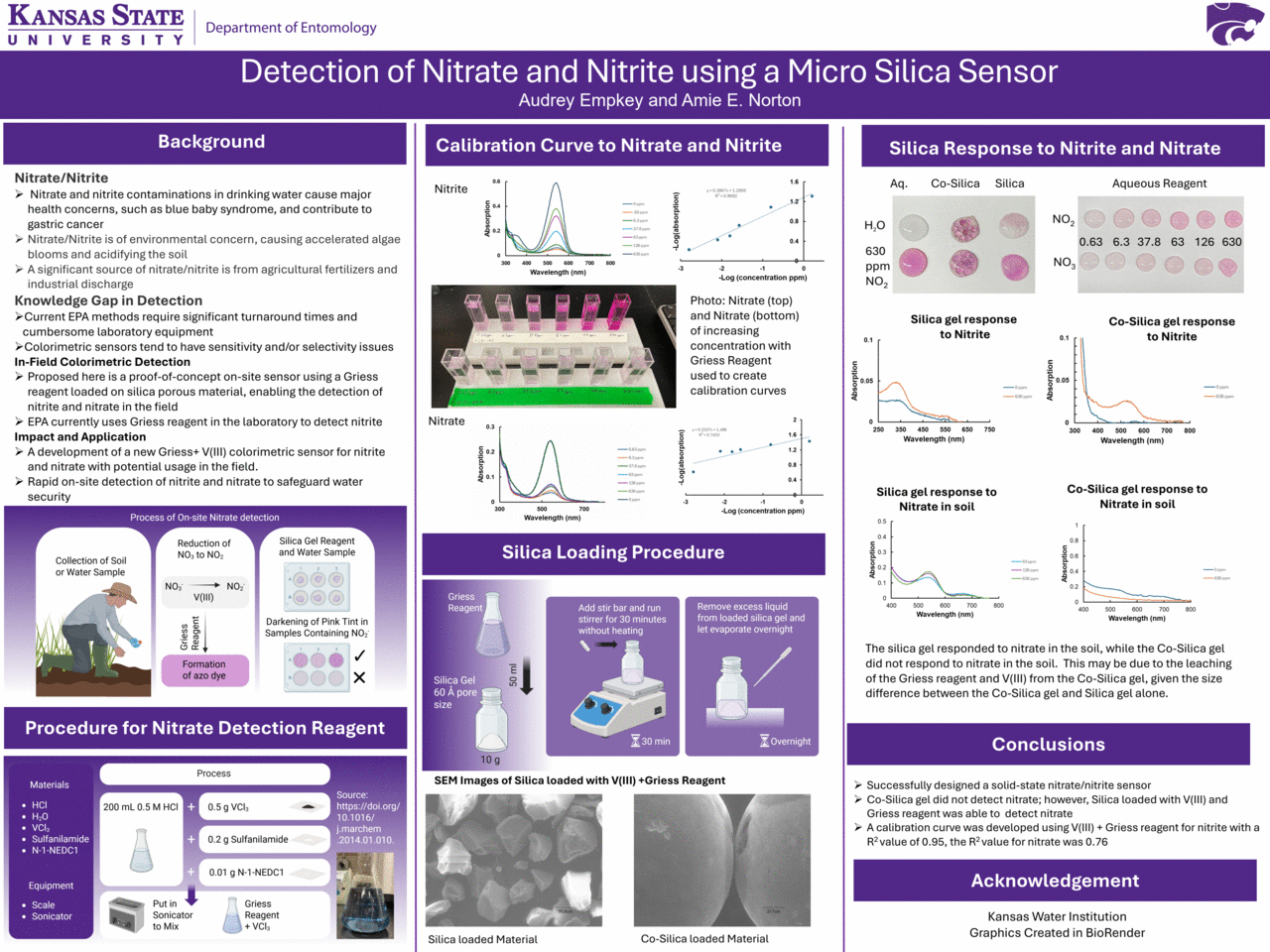
Detection of Nitrate and Nitrite using a Micro Silica Sensor
Audrey Empkey, Amie Norton
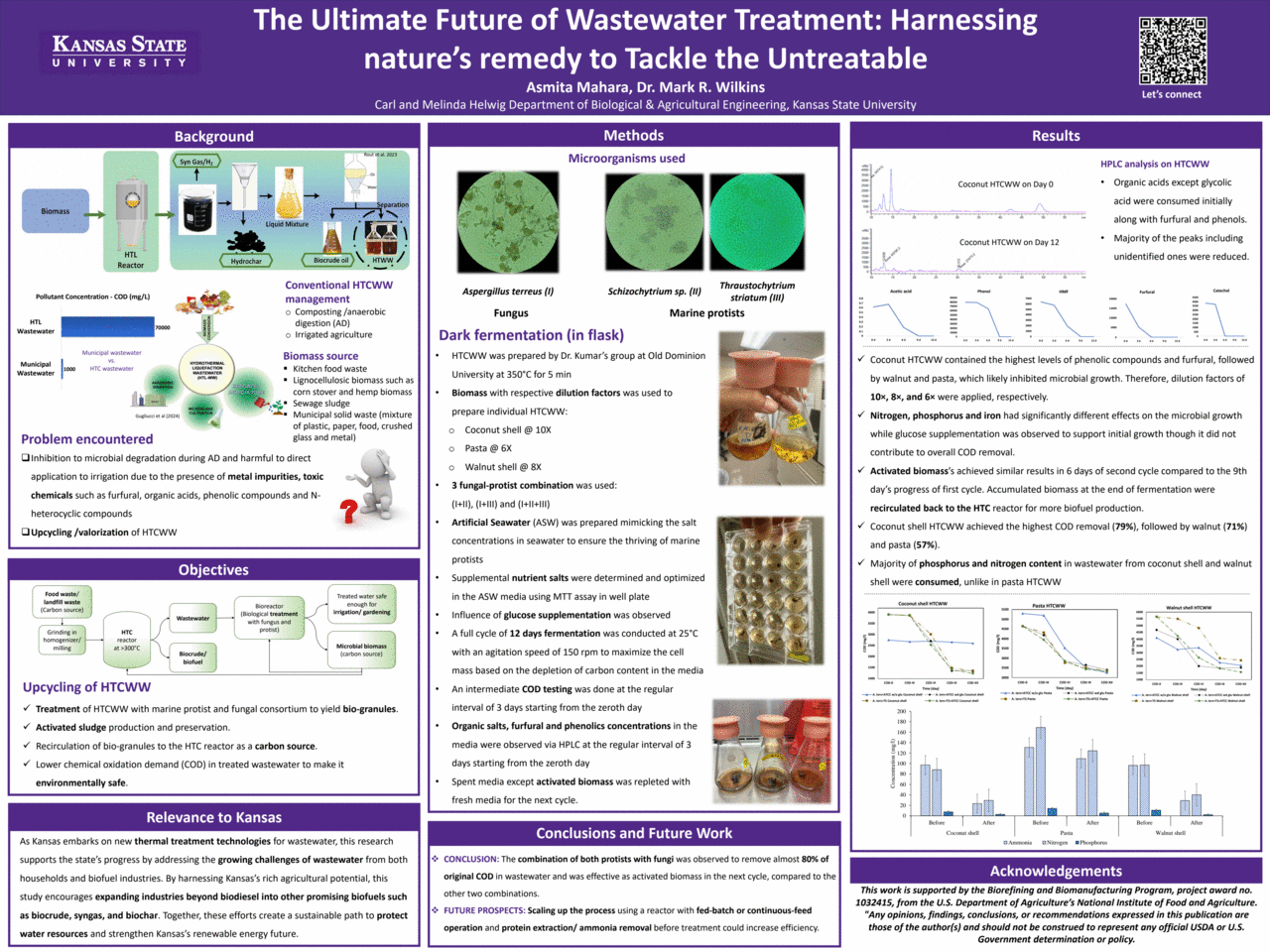
The Ultimate Future of Wastewater Treatment: Harnessing nature’s remedy to Tackle the Untreatable
Asmita Mahara, Mark Wilkins
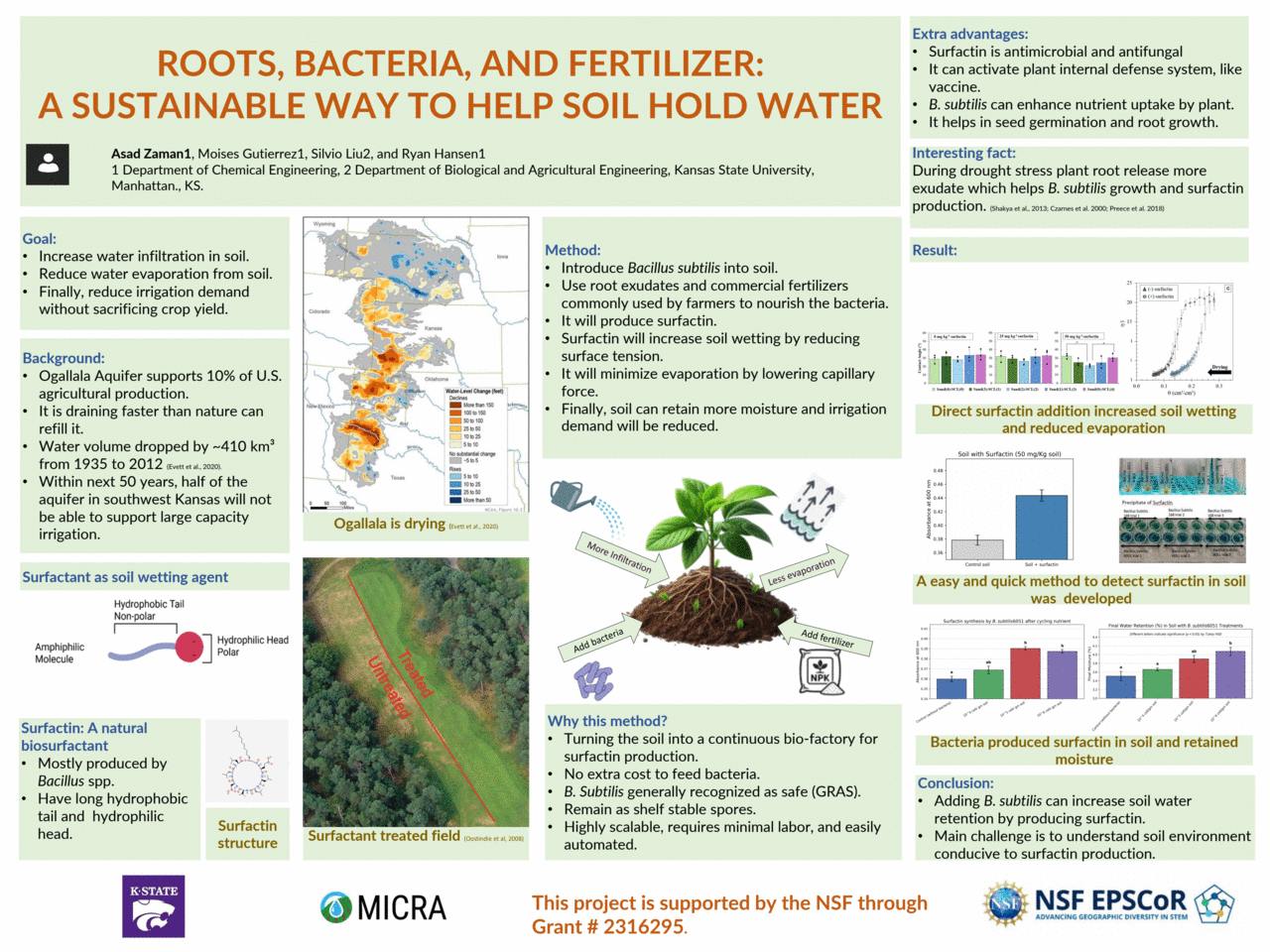
ROOTS, BACTERIA, AND WATER: A SUSTAINABLE WAY TO HELP SOIL HOLD WATER
Asad Zaman, Moises Gutierrez, Silvio Liu, and Ryan Hansen
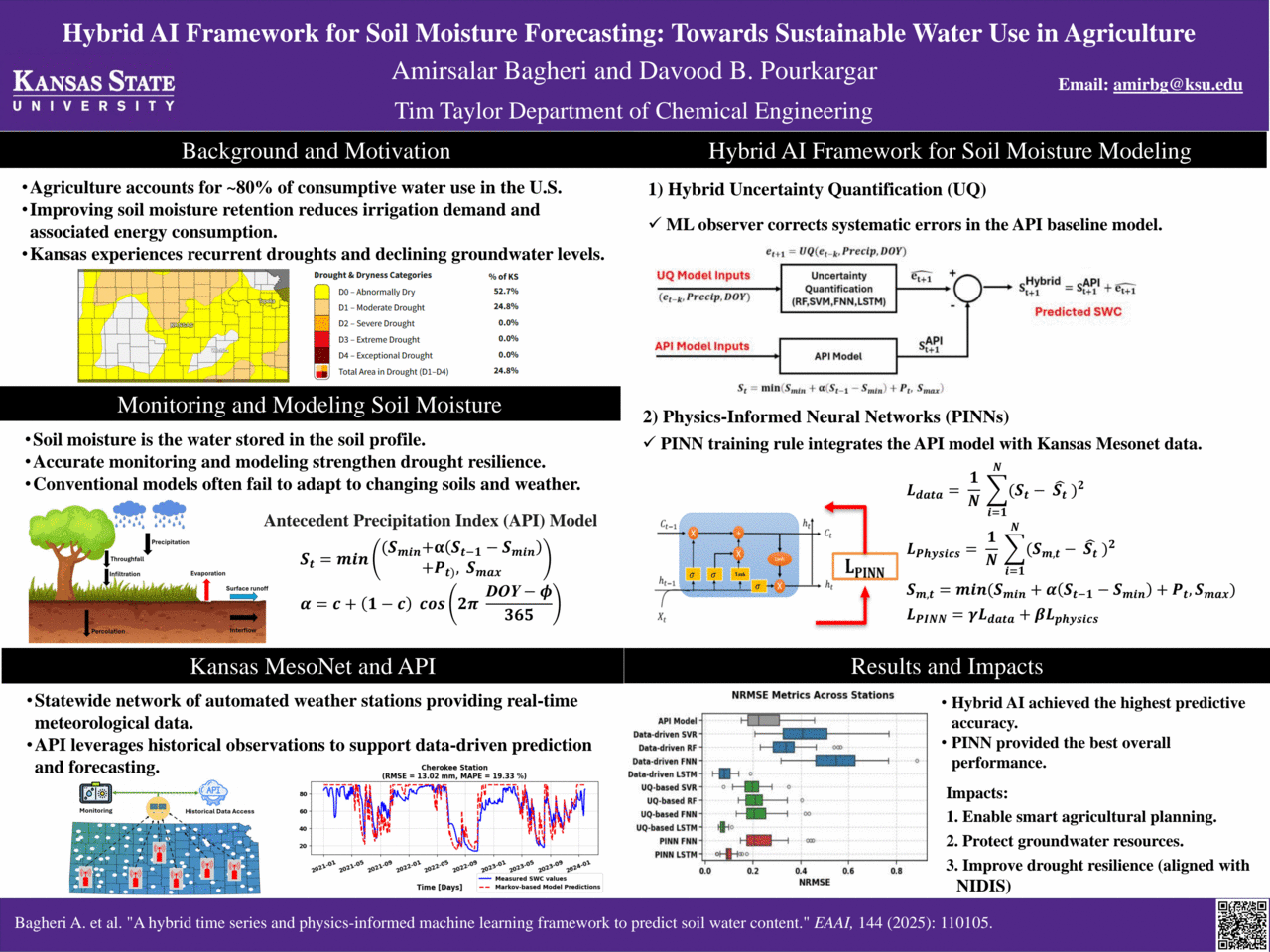
Hybrid AI Framework for Soil Moisture Forecasting: Towards Sustainable Water Use in Agriculture
Amirsalar Bagheri, Davood Pourkargar
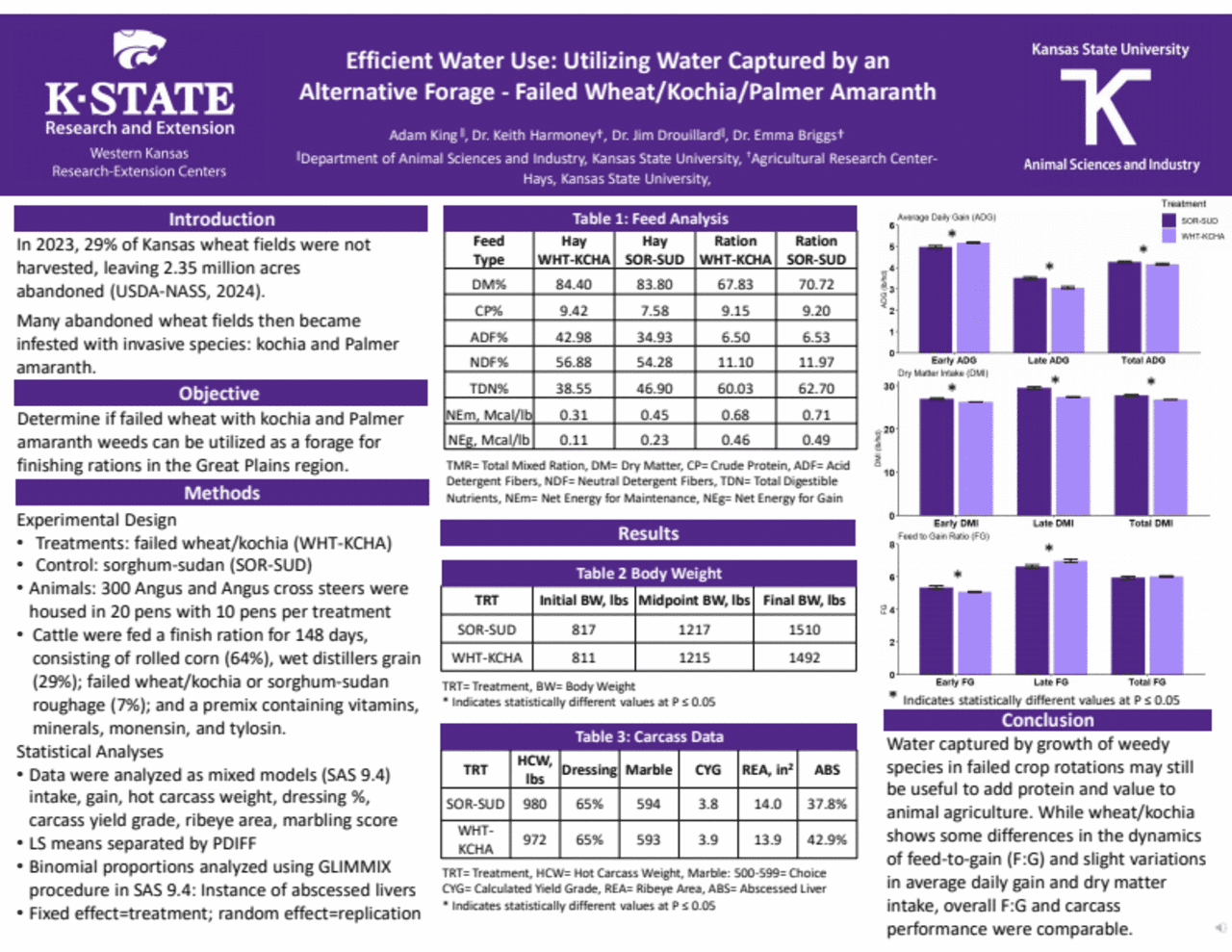
Efficient Water Use: Utilizing Water Captured by an Alternative Forage - Failed Wheat/Kochia/Palmer Amaranth
Adam King, Dr. Keith Harmoney, Dr. Jim Drouillard, Dr. Emma Briggs
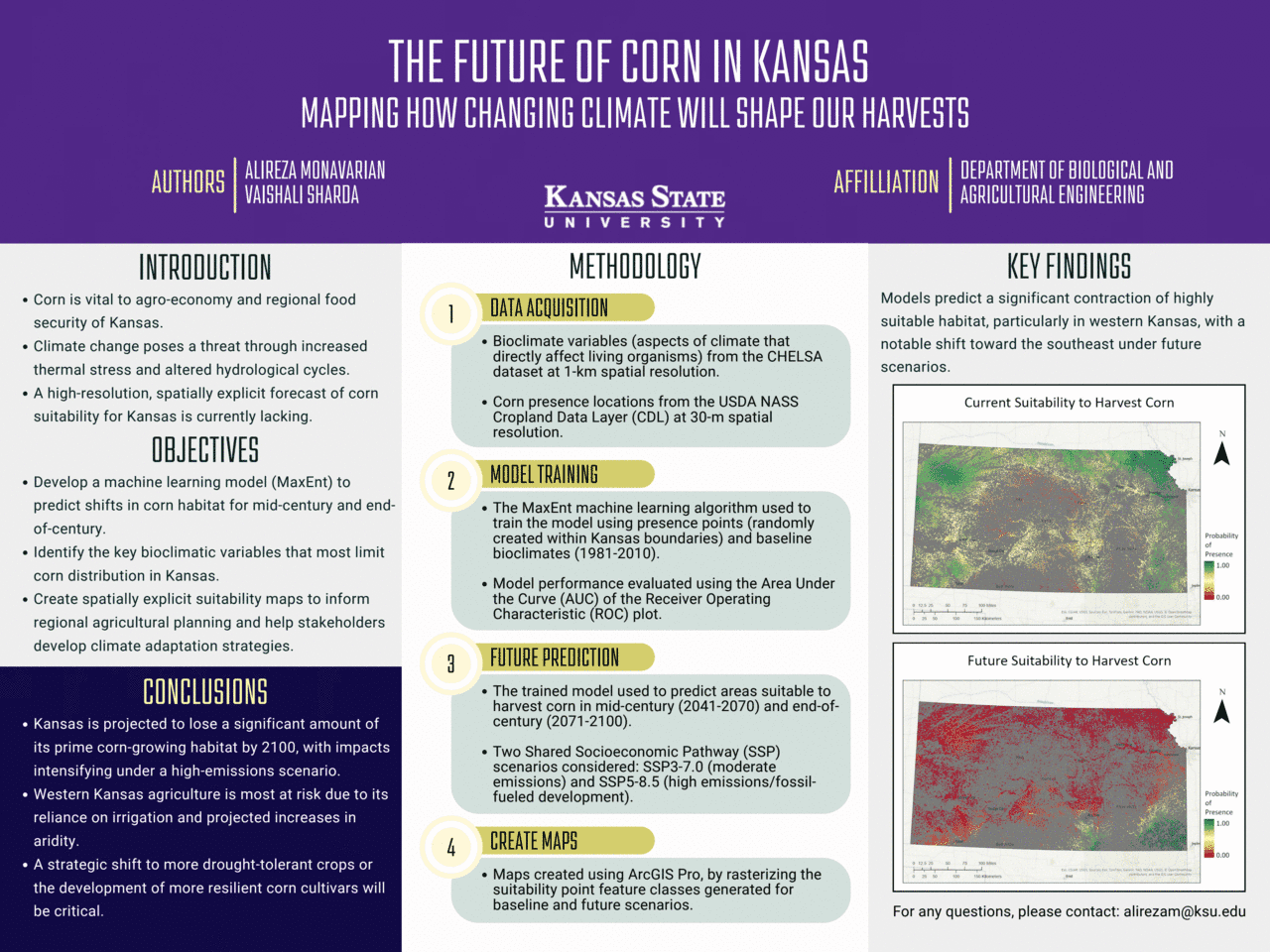
THE FUTURE OF CORN IN KANSAS MAPPING HOW CHANGING WEATHER WILL SHAPE OUR HARVESTS
Alireza Monavarian, Vaishali Sharda
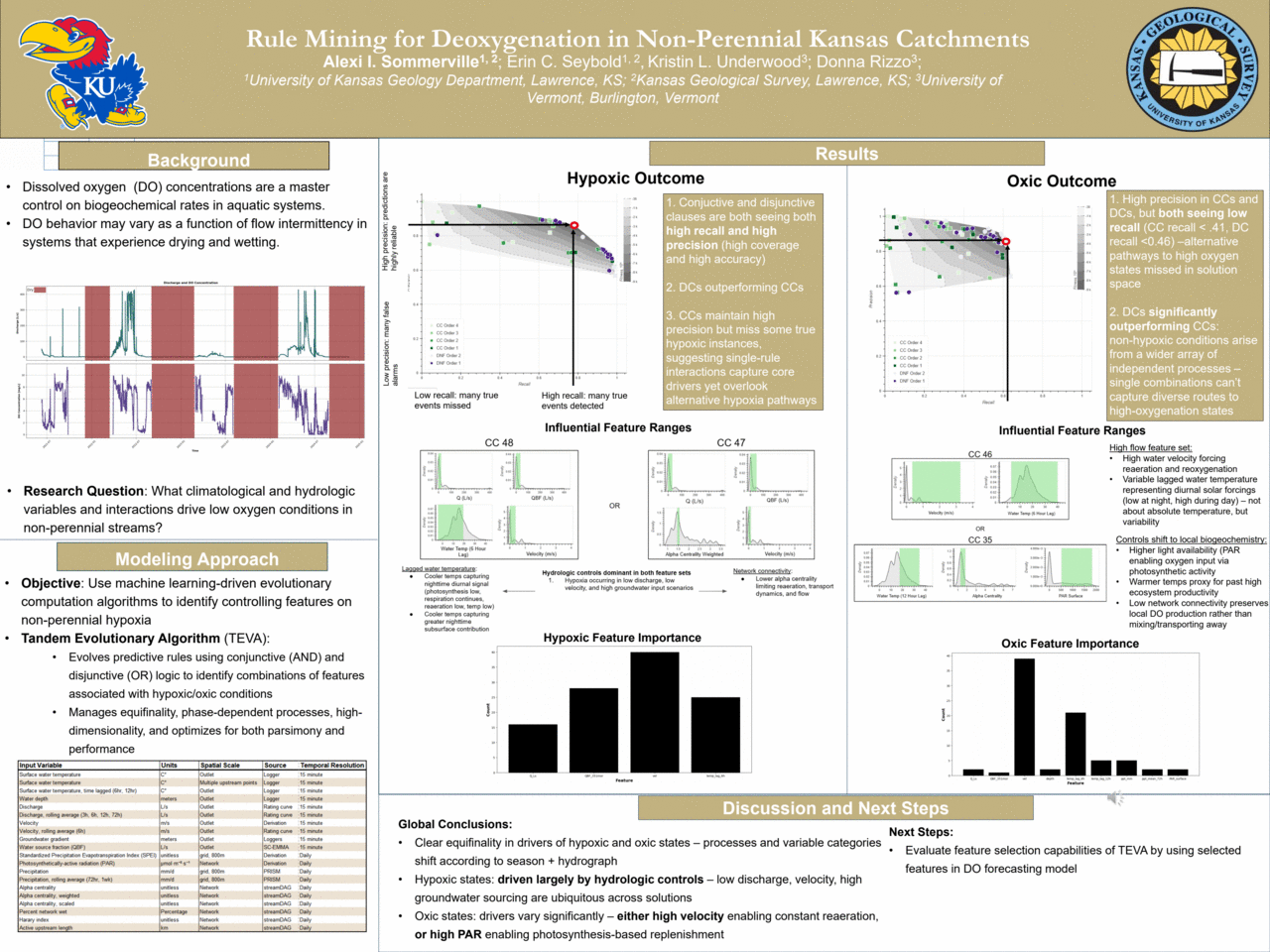
Rule Mining for Deoxygenation in Non-Perennial Kansas Catchments
Alexi Sommerville, Erin C. Seybold, Kristin L. Underwood, Donna Rizzo
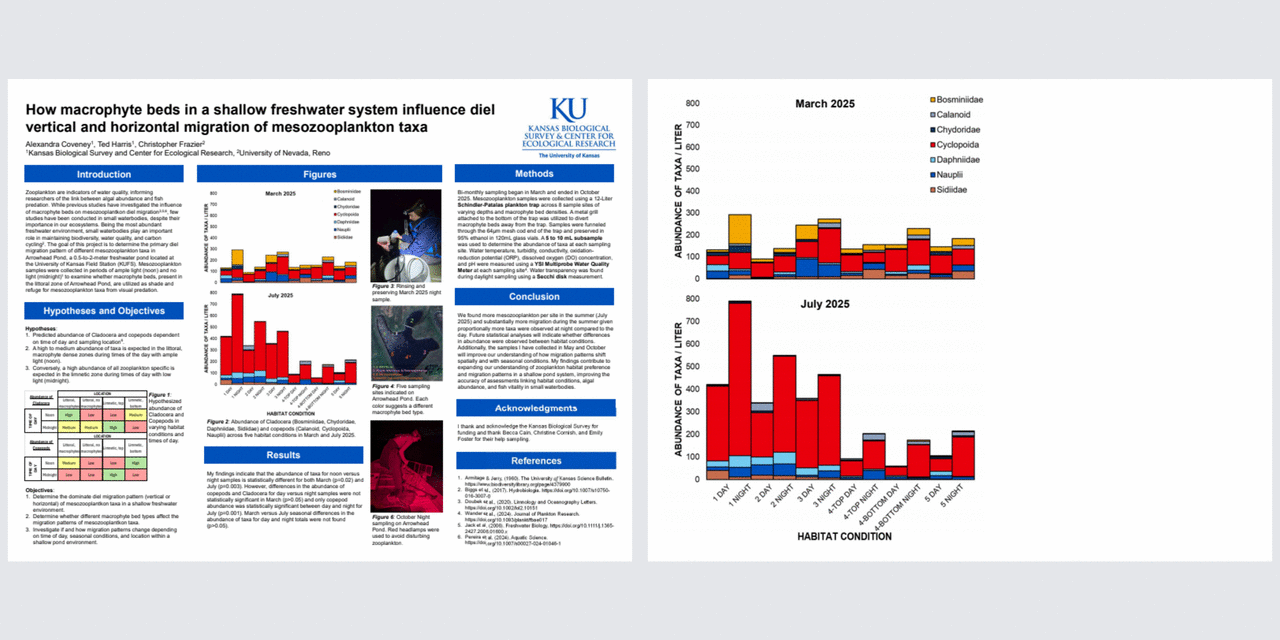
How macrophyte beds in a shallow freshwater system influence diel vertical and horizontal migration of mesozooplankton taxa
Alexandra Coveney, Ted Harris, Christopher Frazier